
How to start rugby union with a solo grounding drill
- Cost to start
- Borrowed ball + free space
- Difficulty
- Beginner
- First result
- Five controlled groundings
Assumes existing shoes and permitted space; club fees are extra
Walk the ball in and lower it while standing
Allow 15–20 minutes for warm-up, practice and pauses
Try a walking-speed rugby union handling drill: carry an oval ball in two hands, stop beyond a marked line and ground it under control five times.
What you need to know
-
An oval ball you can hold in two hands
Borrow a rugby ball if possible. You need a comfortable grip, not posts, a full pitch or a partner.
-
Two flat markers and permitted grass
Choose dry, level ground clear of holes, debris, other people, traffic and obstacles. Use the markers for an imaginary line; leave cords and raised cones out.
-
Shoes, comfortable clothes and water
Wear shoes with grip and clothes you can move in. Bring water, and ask a future club about its own kit requirements.
Rugby union is usually played by two teams of 15. This first attempt is a solo handling exercise: walk with the ball and touch it to the ground under control. It is not a scored try or a substitute for coached play.
Mark a line and warm up
Check the ground before placing your markers a few metres apart. Imagine a try line between them, with an in-goal area beyond. Start about five metres before the line. Walk easily and move your arms comfortably before carrying the ball.
Hold the ball securely in two hands, with fingers spread around its sides. Look up at your route. Walk toward the markers at a pace that lets you stop without a lunge.
Ground the ball five times
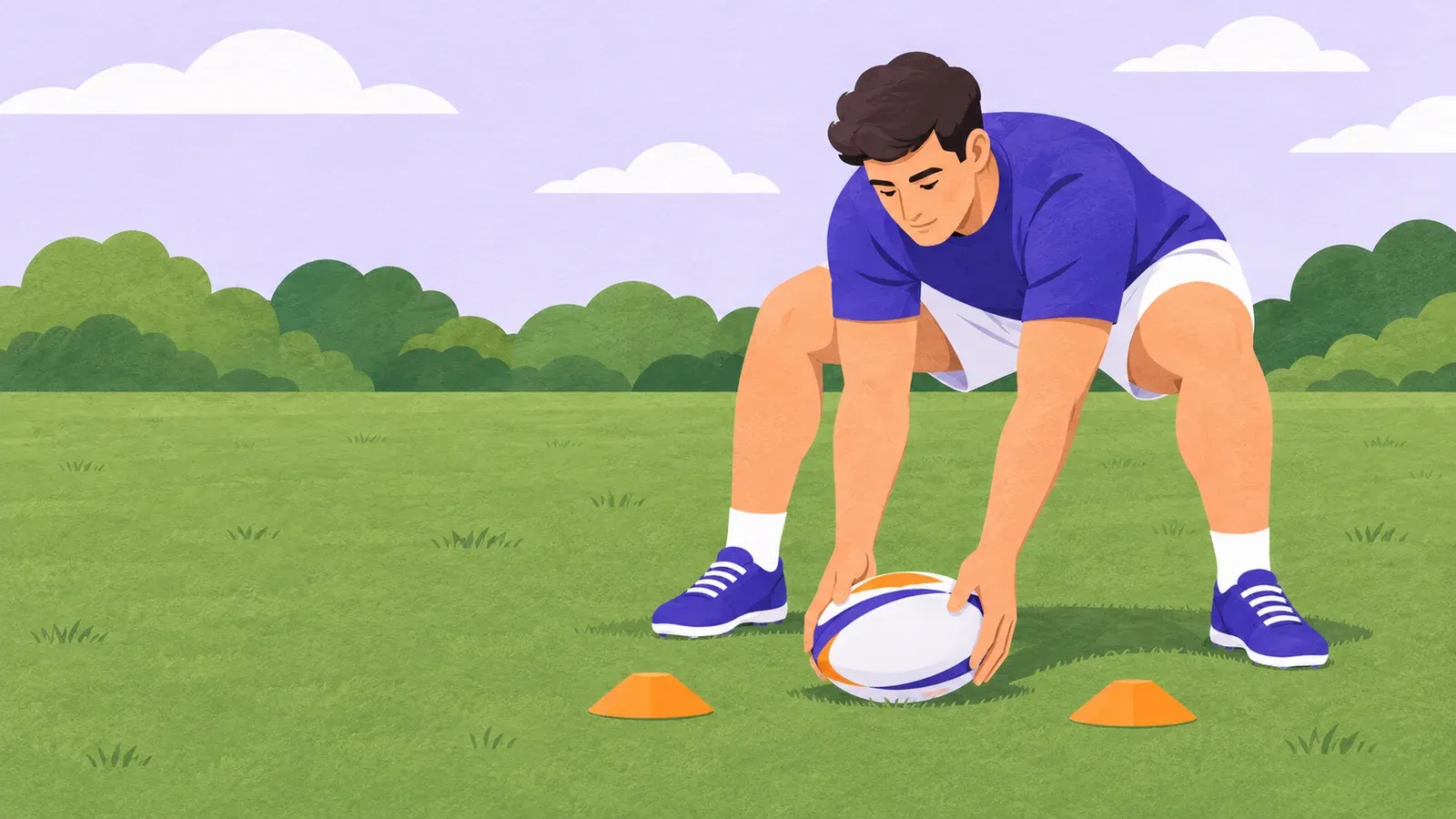
Cross just beyond the imaginary line, stop with your feet balanced and bend your knees. Lower the held ball until it touches the grass, keeping control through that contact. Dropping it does not count for this exercise. Stay on your feet rather than diving. Pick up the ball, walk back to your starting point and repeat until you have five controlled groundings. Pause between attempts as needed.
If the ball slips, let it settle, check that the space is clear and collect it. Shorten the approach and lower it more slowly next time. Pause if someone enters the area. Stop if a movement hurts or the ground becomes slippery. Note how many attempts stayed controlled and what adjustment helped.
Find a coached next step
Ask a rugby union club about an adult beginner session or a coached T1 option. Check who can attend, whether the format involves contact, what equipment the club supplies and any fees. T1 is a non-contact format, but availability depends on the club. If you cannot get a ball or suitable space, the coached session can be your first attempt instead.

Prepare for a first rugby union session
- World Rugby: non-contact activitiesSee two-handed carrying and grounding cues in the Relay Races and Score a Try group activities.
- World Rugby: law 21, in-goalRead rule 21.1(a) for how a held ball is grounded and 21.3 for when that scores a try.
- World Rugby: T1 RugbyExplore a non-contact rugby union format before asking a local club about coached beginner options.
