
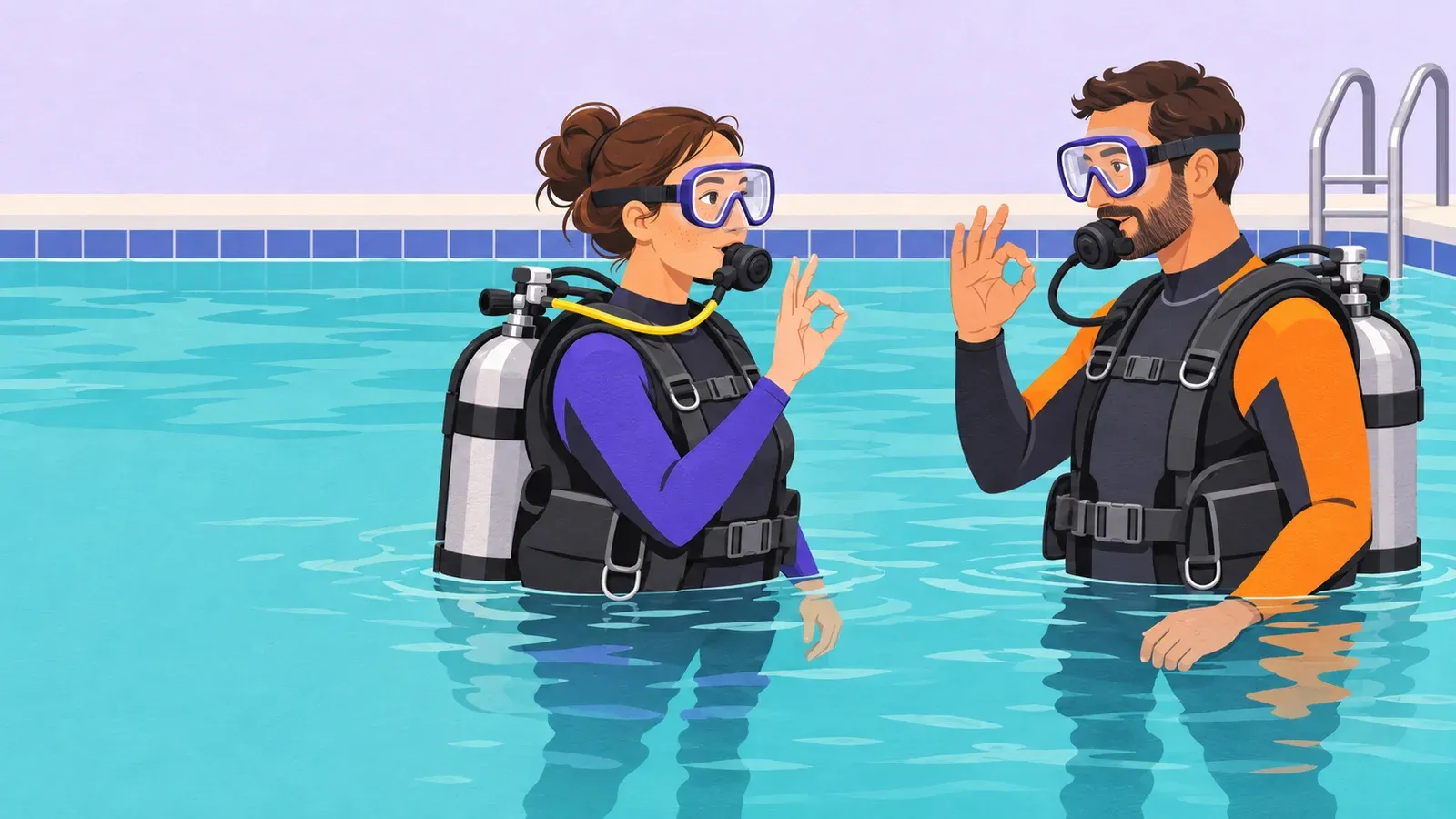
How to start scuba diving with a supervised pool session
- Cost to start
- £30 England example; fees vary
- Difficulty
- Moderate
- First result
- One supervised pool session
Pool, instructor and kit included; travel or clearance may cost extra
Screening and unfamiliar breathing call for an instructor-led pace
First underwater breaths and a decision about further lessons
Book a pool introduction, complete medical screening, and try breathing underwater with an instructor and supplied equipment.
What you need to know
-
Find a beginner pool session
Choose a qualified instructor with a recognised training provider. Ask about group size, swimming requirements, access needs and how to stop. Mention anxiety in water.
-
Complete the provider's medical screening
Request its current form early and follow every instruction. Get any required clinician clearance before diving. Ask about guardian rules if booking for a minor.
-
Bring swimwear and a towel
Pack any shirt or layer the provider requests. Confirm the fee covers pool entry, instruction and fitted kit; ask about cancellation and medical assessment costs.
The BSAC try-dive format begins with a briefing and an instructor-led pool dive. Seek a shallow, pool-only introduction. Tell the provider how comfortable you are swimming; take swimming lessons first if you cannot meet its requirements. The UHMS screening form says to postpone diving when ill and not to dive while pregnant or attempting pregnancy. Ask about flying or altitude travel before booking; DAN’s timing guidance depends on the dive.
For a price example, Reading BSAC in England listed £30 in November 2026 for an instructor, pool and kit. Confirm its price and dates, or get a local quote for what is included. You need no scuba purchase for this try.
Take your first breaths with the instructor
Before entering, practise the instructor’s OK, problem and stop signals. They will fit and check the kit, show you how to use the regulator that supplies breathing air, and explain how to relieve ear pressure. Begin where you can stand comfortably. Follow the instructor’s descent, ascent and exit. Breathe normally and continuously through the regulator; never hold your breath while on scuba, even in shallow water. There is no depth target.
Stop when something hurts or feels wrong
Equalize your ears early and gently as taught. If pressure becomes painful, stop descending and signal the instructor. Pause and signal if breathing feels difficult, anxiety rises or your mask causes trouble. Let the instructor help; do not force your ears or rush upward. DAN’s ear guidance explains why pushing through pain can injure an ear. If the problem persists, end the session together.
Decide what comes next
Ask the instructor what felt steady and what needs another lesson. You can book another supervised session or discuss a full entry-level course and its separate requirements. A pool try-dive does not certify you or prepare you to dive independently.

Introductions and safety
- BSAC pool try-dives (UK)See how an instructor-led pool introduction works and find a local club.
- PADI Discover Scuba Diving questionsRead about water confidence, supplied equipment, introductory skills and screening.
- Diver medical screening form (PDF)Preview the 2026 English questionnaire, then complete the current form your provider requires.
- DAN ear equalization guidanceLearn why ear pressure needs gentle attention and why pain means stopping the descent.
