
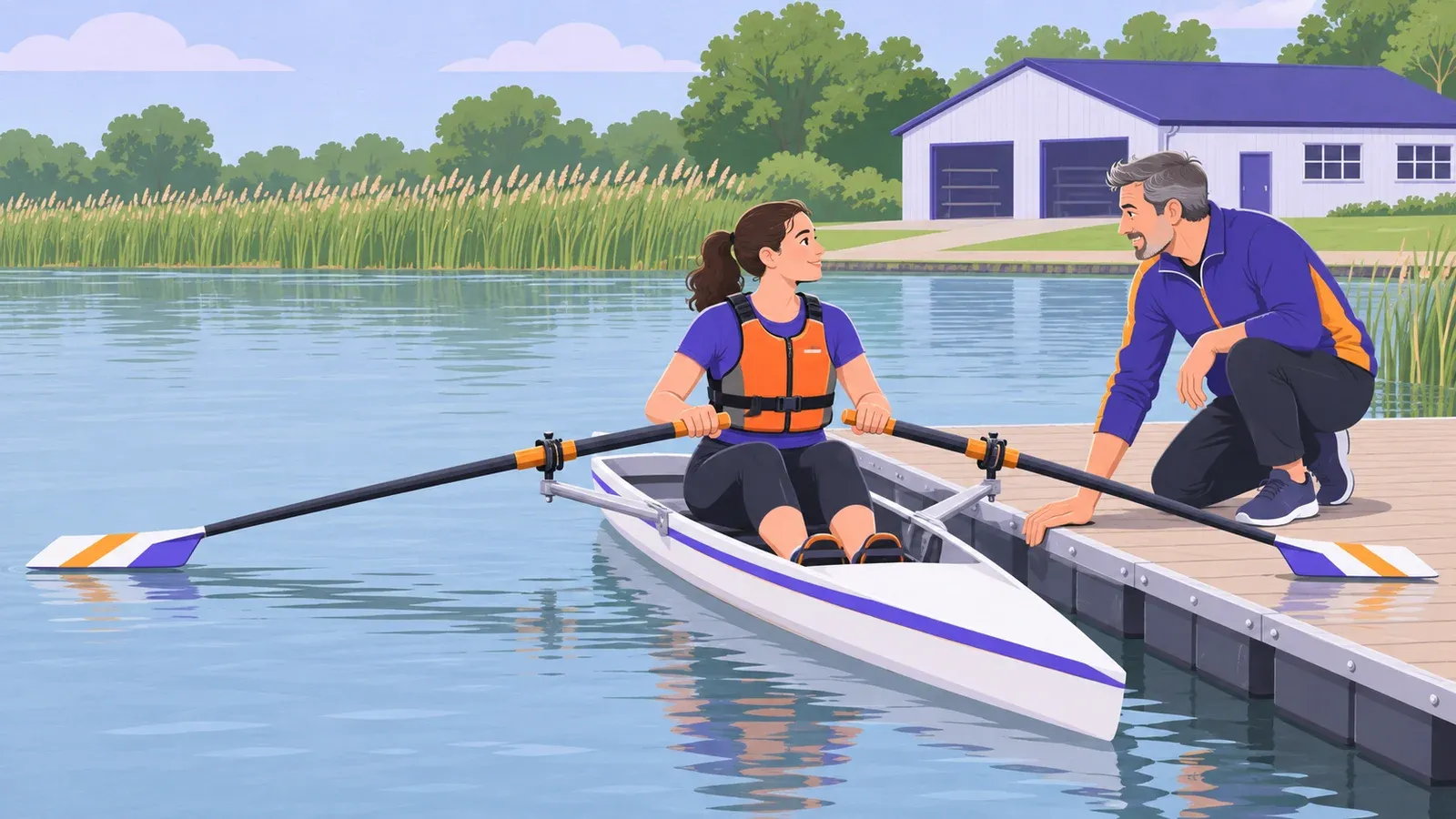
Sculling or rowing: take your first coached strokes
- Cost to start
- £40 England taster example
- Difficulty
- Beginner
- First result
- A coached sequence of strokes
Listed Nov 2026; confirm dates, kit and weather cancellation
Coach-led practice in a stable training boat
Launch with help, row briefly and stop on command
Find a club taster, prepare on shore and try a short sequence of strokes afloat with a coach when conditions allow.
What you need to know
-
Find a beginner club session
Book a coached club taster. State your swimming ability and access needs before paying; confirm its swim assessment, capsize practice and flotation rules.
-
Use the club's training boat
Confirm the fee includes a stable boat, mounted oars and coaching. Wear the flotation the club fits and requires.
-
Dress for spray or a capsize
Wear close-fitting sports layers, socks and trainers that can get wet. Pack dry clothes and a towel in case you capsize.
-
Pack for the day's weather
Bring water and sun or rain protection. Ask what suits the forecast; the coach decides whether to launch.
In sculling, each rower handles two boat-mounted oars. In sweep rowing, each handles one. A club coach chooses the training boat and teaches the sliding-seat stroke.
Book a beginner club session
Choose a club session with a coach and safety cover. Clubs assess water readiness for each participant; a buoyancy aid alone does not settle it. Discuss health concerns or worries about falling in before the session.
For a price example, Marlow Rowing Club in England listed a shorter taster by arrangement for £40 in November 2026. The page gives no duration or future date for that option. Confirm a slot, full fee, supplied kit and cancellation terms with your club; allow for travel. If the coach postpones boating because of weather, water conditions or readiness, practise on shore and arrange another coached water session.
Make your first strokes
Start with the coach’s shore demonstration. Let them check the boat, oars, fit and foot release. Practise getting in and out, the stop and recall commands, and what to do if the boat capsizes. RowSafe covers these induction steps for new rowers. Launch only when the coach says the boat and conditions are ready. Keep hold of the handles unless the coach directs otherwise.
Once afloat, keep strokes light. Follow the coach’s cue to push with your legs, swing your body, then draw with your arms; the recovery reverses that order. British Rowing’s technique guide describes that sequence. Keep a relaxed grip and follow the timing cue if others are in the boat. If your strokes clash or the boat feels unsteady, ease off and ask the coach to reset the movement. Pulling harder will not fix the timing.
Stop on command. If you feel pain, become cold or feel afraid, stop and tell the coach. Return to the landing and get out with their help. Ask which single cue to carry into the next coached session. The session gives no clearance to row alone.


