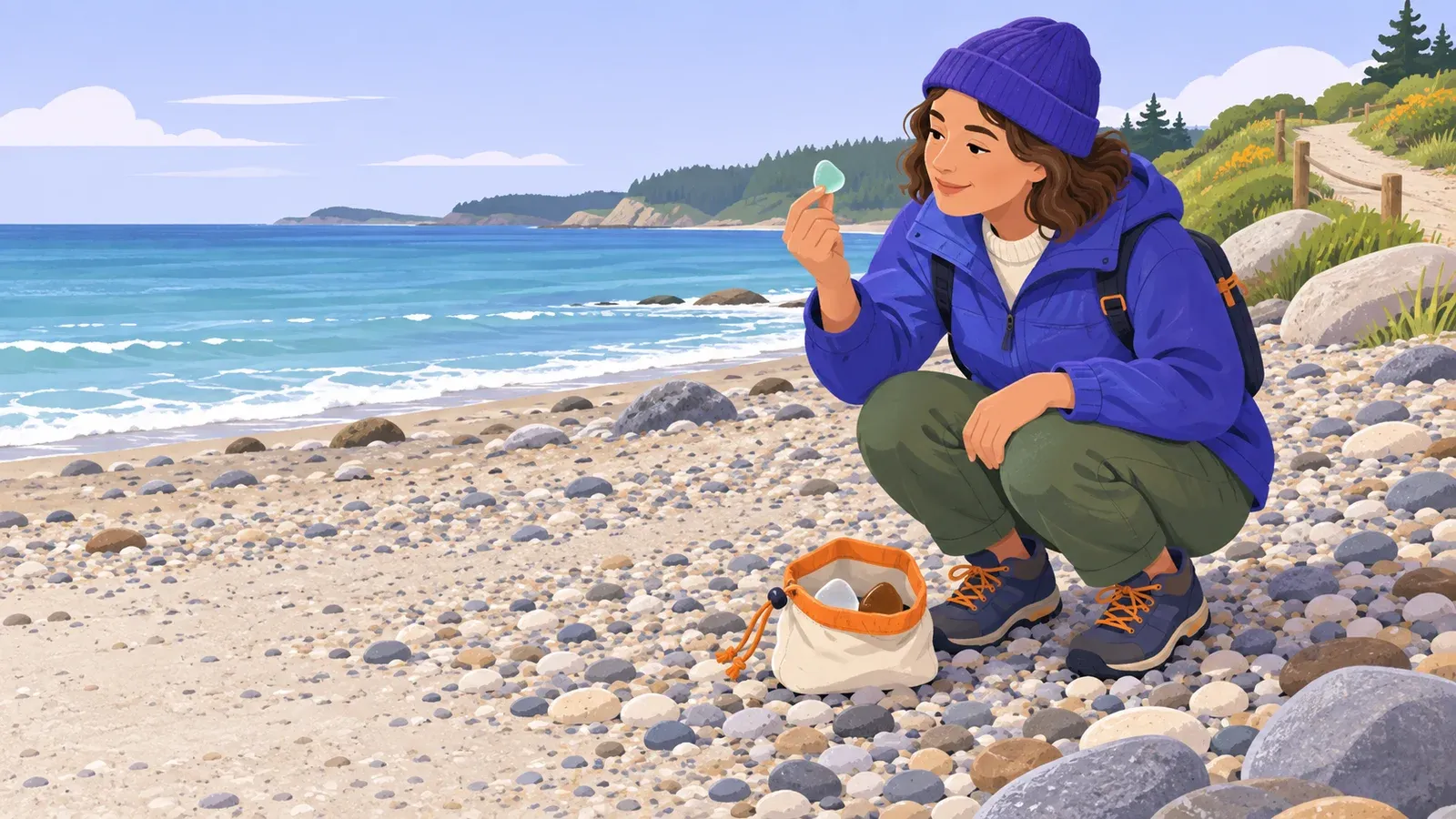
How to start sea-glass collecting on a short shore walk
- Cost to start
- $0 using existing supplies
- Difficulty
- Easy
- First result
- 30-60 minutes
Allow for transport, parking, and any local access charge
Spotting glass takes practice; finding pieces is never guaranteed
A shore-walk record and, if found and permitted, a few pieces
Choose a shore where collecting is allowed, look for rounded and frosted glass, then photograph and record a few finds without assuming their age or value.
What you need to know
-
Confirm access and permission
Ask the beach owner or managing authority whether glass removal is allowed; public access alone does not establish collection permission.
-
Plan for the conditions
Check local tide times, weather, warnings, and your exit route; choose daylight, calm conditions, and firm footwear with covered toes.
-
Bring a small container
A reused lidded plastic tub or sturdy pouch holds a few smooth finds; a sieve and specialist collecting tools are optional.
-
Keep a simple record
Bring a phone or notebook, plus a ruler for photos at home; keep finds from separate places in separate containers.
Sea glass is discarded glass naturally worn in salt water. Collecting suits people who enjoy slow walks and noticing small differences in color, shape, and texture. Freshwater shores offer a similar hobby, usually called beach-glass collecting.
Search one accessible stretch
Choose a beach with an easy, visible exit. If permission is unclear, photograph finds in place and leave them. Avoid closed areas, archaeological sites, unstable cliffs, and wildlife resting or nesting areas.
Set a short route and a return time. The RNLI’s tide guidance explains why walking around a headland at low tide can leave you cut off later. Keep checking the water and your route while searching; stay out of waves and postpone the walk during rough weather.
Walk slowly along exposed pebbles or sand above the wave reach. Look for small colored patches between stones. Change your viewing angle before moving on. Leave the shore undisturbed; digging through seaweed or turning over habitat is unnecessary for this attempt.
Choose smooth pieces and record observations
Look for rounded edges and a dull, frosted surface. Inspect a candidate visually before handling it; do not run a finger along an uncertain edge. Skip sharp fragments and report dangerous debris to the beach manager. Never put broken glass into the water to make future finds.
Where removal is permitted, choose up to three pieces you like. Color alone cannot establish an object’s age, original use, or value. A green fragment may remain an unidentified green fragment.
At home, rinse smooth finds in plain water and let them dry. Photograph both sides beside a ruler. Record the date, beach, size, color, and any visible marks. Keep each piece with its record in a small compartment or labeled container.
If you found nothing, save a photo and note where you searched and the conditions. Try the same accessible stretch another day, or ask a local collector about a permitted shore. Compare future finds by shape and surface before expanding the collection.

Prepare and learn where to look
- RNLI guidance on tidesLearn how rising water can block a return route, with local tide-information suggestions for the UK and Ireland.
- Andi Clarke's sea-glass hunting tipsRead an experienced collector's advice on observing shore conditions and choosing footwear, keeping your first walk out of the surf.
Describe and compare pieces
- Beachcombing Magazine's sea-glass glossaryLook up terms for weathering, glass types, and the distinction between saltwater sea glass and freshwater beach glass.
- Richard LaMotte's sea-glass identification talkWatch a specialist explain clues to glass origins and dates before researching a marked or unusual piece.
- r/seaglassShare clear find photos and questions in a community that prohibits illegal collecting and restricts promotional posts.