Skateboarding: push, turn and stop on flat ground
- Cost to start
- Lesson fee; supplied kit
- Difficulty
- Beginner
- First result
- One beginner session
Confirm board, helmet, pads, access and local travel costs
Balance and stopping need coached practice
Try a small push, gentle turn and controlled stop
Start with a coached flat-ground session, check your board and protective gear, and practise a small push, gentle turn and controlled foot brake.
What you need to know
-
A beginner coach and clear space
Book a flat-ground lesson in a permitted, dry, level area. Confirm the cost, equipment and room to stop away from other riders and traffic.
-
A complete skateboard
Use a standard board supplied or checked by the coach. Ask them to inspect the deck, wheels, grip and hardware before you ride.
-
Skating protection
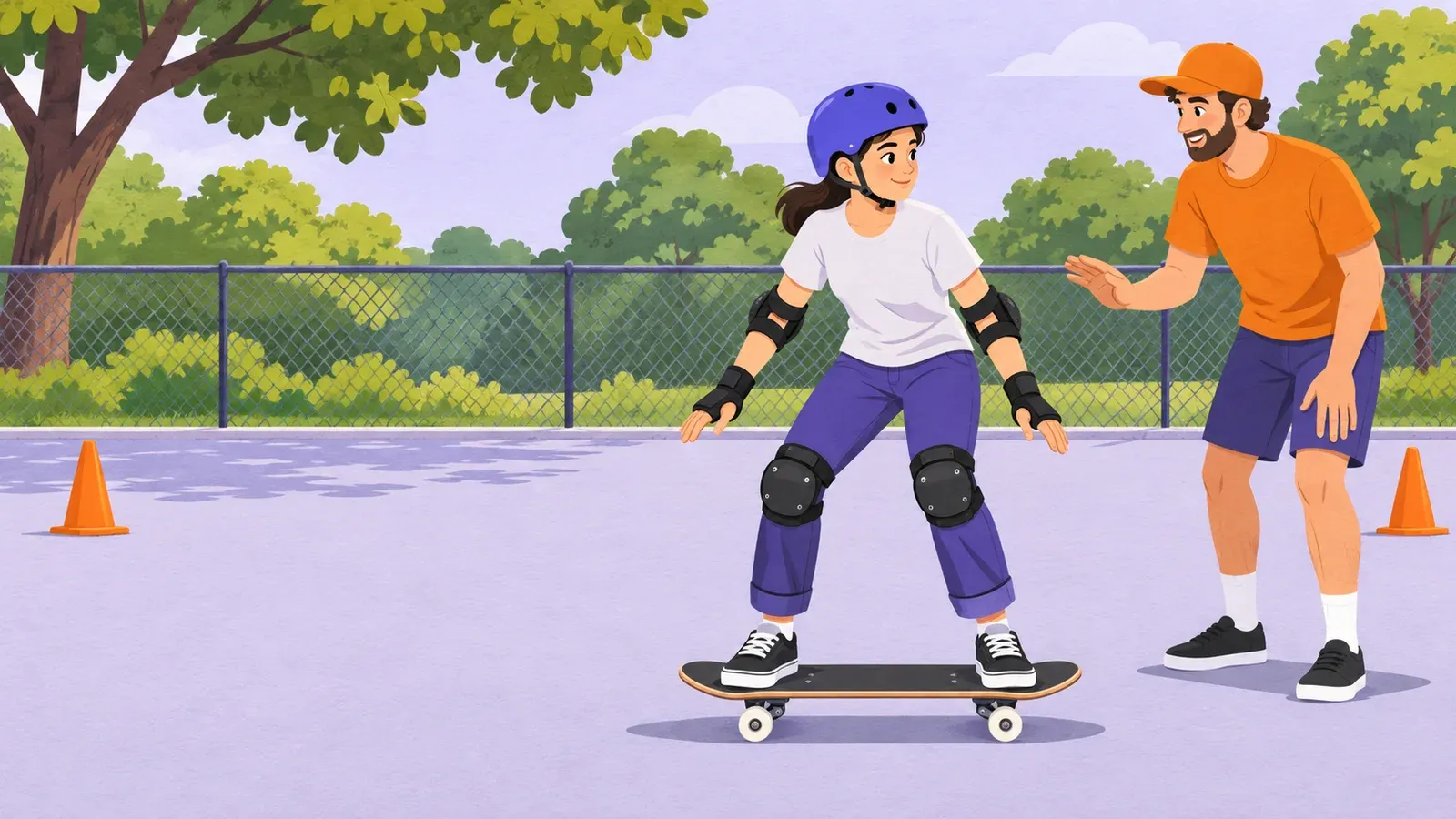
Wear a snug helmet rated for skateboarding, with its strap fastened, plus wrist guards and knee and elbow pads. Have the coach check the fit.
-
Shoes and water
Wear closed, flat-soled shoes with tied laces and comfortable clothes. Bring water for breaks.
Start with a single push and a stop on flat ground with a coach. Leave ramps for later.
Check the board and practise stepping off
Ask the coach to check the board and demonstrate stepping off and falling. Clear stones from the lane; avoid cracks, holes, wet patches and slopes. Leave room to stop. The US CPSC safety sheet covers these checks.
With the board held steady, try each foot forward. Place your preferred leading foot across the front bolts and the other across the rear bolts. Bend your knees, centre your weight and rehearse stepping on and off. Avoid the raised nose and tail.
Push once, then brake
Turn the front foot toward the nose over the front bolts. Bend that knee and keep your weight over the board. Push once, lightly, with the back foot beside it. Set that foot across the rear bolts and turn the front foot sideways to ride. Look along the clear path. Skateboard GB’s guide shows these positions.
Rehearse braking with the coach before rolling. After one slow push, turn the front foot forward again, keeping weight above it. Lower the back foot beside the board and press its sole gradually against the ground until stopped. Don’t stamp. If the board lurches or escapes, practise stationary foot positions and make the next push smaller. Repeat before going farther.
Add a broad turn
When short stops are repeatable, ride with both feet across the board. Press gently through your toes to turn one way, then your heels for the other, keeping all wheels down. Follow a broad curve and finish with the foot brake. If steering jerks, ease the pressure and ask the coach to check your stance.
Stop if hurt, tired or out of control; report a head impact. Next session, repeat these drills before adding speed or obstacles.

Learn and prepare
- Skateboard GB first movementsRead the stance, pushing, turning and stopping sections before your lesson.
- Find a skateboard coach (UK)Search for a UK beginner lesson, then confirm its practice area, equipment and total fee.
- CPSC skateboarding safety (US)Review board, protective gear and practice-area checks in this US safety sheet.

