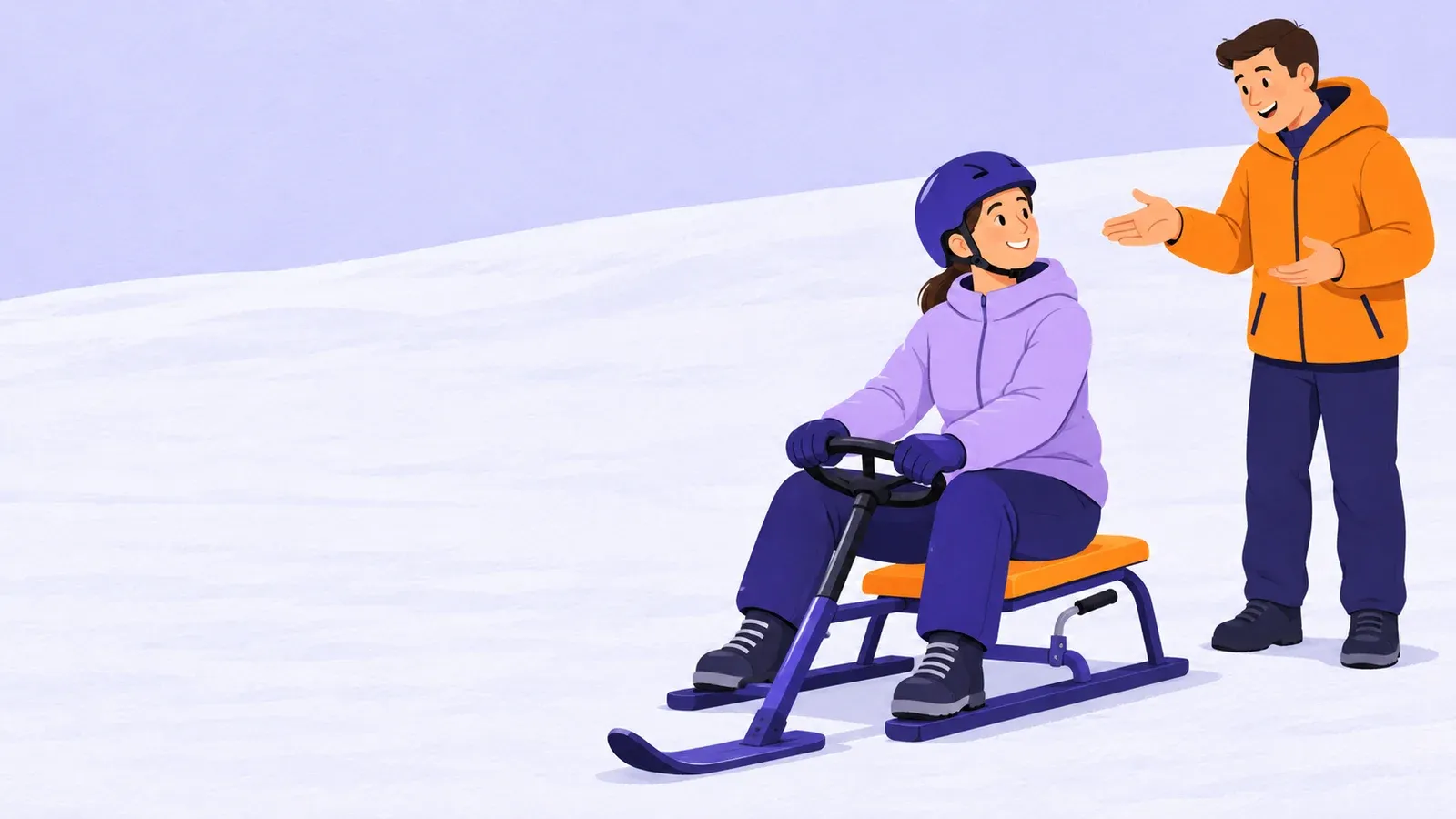
Try sledding with a short ride and controlled stop
- Cost to start
- Free hill with borrowed gear
- Difficulty
- Beginner
- First result
- One short ride and stop
Calgary, Canada example. Transport and gear hire extra
A companion shows the controls before you ride
Allow about 30 minutes for checks and low starts
Choose a suitable hill and borrowed steerable sled, learn its controls with an experienced companion, then try one short feet-first ride and stop.
What you need to know
-
A permitted hill and experienced companion
Check local rules and conditions. Ask someone familiar with the sled to inspect a gentle section and show you its controls.
-
A checked adult-suitable sled
Borrow a wheel-steered model with a built-in brake and a load rating for your dressed weight. Check its steering, brake and fittings with the owner. Secure or retract its pull cord before riding. Read its manual.
-
Helmet and winter clothing
Wear a snug, fastened, certified ski or snowboard helmet of known undamaged history, plus warm layers, gloves and boots. Secure loose clothing and skip dangling scarves.
Find a short, clear route
In Calgary, Alberta, Canada, the city lists permitted sledding hills and free activities that include sledding. Its restriction applies to city-maintained parks. Elsewhere, check local rules. A listed hill still needs inspection. Confirm access, weather and any transport or gear costs.
Walk the short route with your companion. Look for a gentle, broad slope ending in a spacious, level runout, as the National Safety Council advises. Keep away from roads, parking, trees, posts, fences, drop-offs and water. Check for people, holes and bare ground. Avoid hard or icy snow. If the route, snow cover or visibility is poor, or it is dark, return another day.
Learn the controls, then ride from low down
On level snow, have your companion demonstrate the steering and brake. Sit alone and check that you can reach both controls. Turn the wheel slightly to see how the front ski moves, centre it, then rehearse applying and releasing the brake. Use the hand and foot positions in your sled’s manual. The STIGA manual is one example.
Start near the bottom, with your companion outside the descent lane. Wait until the route and runout are empty. Sit upright facing downhill, hands and feet in their intended positions. Glide straight without a running launch. Use the brake early as demonstrated and stop in the flat space. Move yourself and the sled aside, then walk back outside the descent lane.
Resolve problems before another run
If steering or braking felt uncertain, stay low. Return to level snow with your companion and check the controls, fit and surface. Try a still shorter start only when the problem is clear and resolved. Leave if the sled cannot be controlled or the snow has become icy.
If the stop felt reliable and conditions remain suitable, repeat from the same low start. Ask your companion to guide one small steering movement on a later run. Stop when you are cold, wet or tired.

Hill and safety guidance
- City of Calgary sledding hillsFind Calgary's permitted hills and read its clear-lane and walk-back advice.
- Calgary free winter activitiesConfirm that the city lists sledding as free and arrange your own suitable gear.
- National Safety Council sledding adviceCheck the slope, level runout, obstacles and condition of your sled.
- Health Canada helmet safetyCheck helmet certification, fit, damage and the history of borrowed equipment.
