Snowboarding: make your first controlled glide
- Cost to start
- C$300–450 estimate
- Difficulty
- Beginner
- First result
- One beginner lesson
Canada planning figure; travel, parking and food extra
Learn movement and stopping under instruction
Allow half a day for fitting and practice
Take an adult beginner lesson, move with one foot attached on flat snow, then try short coached slides and stops on suitable learning terrain.
What you need to know
-
A first-timer snowboard lesson
Book an adult beginner class with an instructor and learning terrain. Confirm age and access rules, arrival time and the full price.
-
Fitted rental equipment
Have staff fit the board, bindings and boots and choose the leading foot with you. Report painful, loose or numb-feeling boots.
-
Helmet and wrist protection
Wear a fitted snow-sports helmet, goggles and wrist guards under or within waterproof gloves. Confirm what you must bring or hire.
-
Warm, dry clothing
Use suitable layers, waterproof jacket and trousers, and snow-sport socks. Bring water and a snack; check conditions before travelling.
In a first snowboard lesson, aim to move and stop on snow with an instructor. Practise on flat ground before trying a short slide on suitable nursery terrain.
Check the full first-day cost
Choose a first-timer class and tell the school about relevant access needs. The C$300–450 figure is an editorial estimate for a local Canadian day: instruction, board, bindings, boots, helmet, learning-area access, tax and wrist protection. It assumes you own or have arranged suitable winter clothing, gloves and goggles. Get an itemized quote before paying.
As checked November 2026, Cypress Mountain’s group lesson lasts 2.5 hours but excludes tickets and rentals. Its rental page charges extra for adult helmet hire and describes card or debit-deposit security. That security needs available funds but is separate from spent lesson fees. Confirm the arrangement for your booking and arrive early for fitting.
Skate, glide and stop with a coach
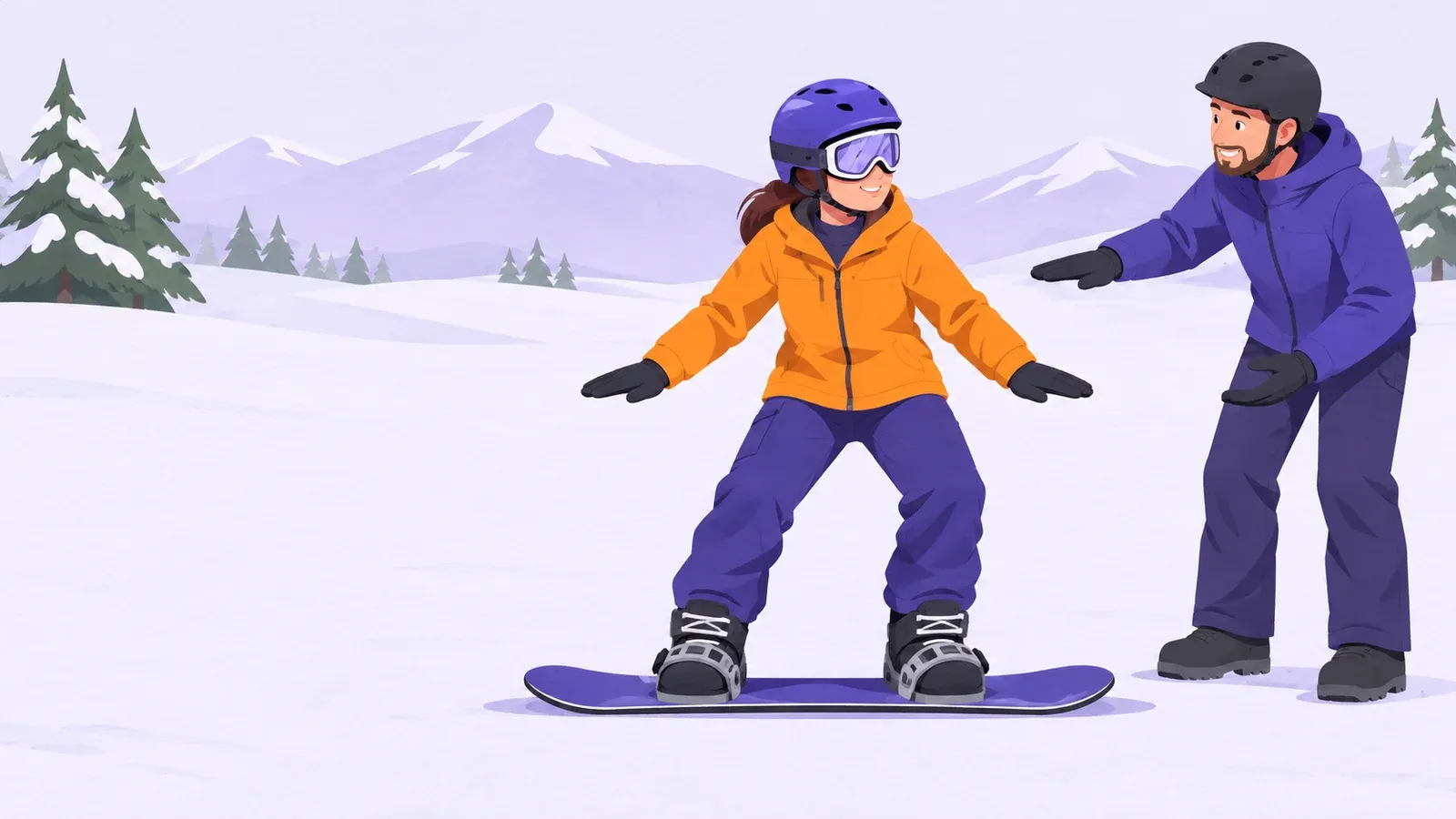
Let the instructor demonstrate carrying the board, fastening and releasing bindings, falling and getting up. With their help, establish your leading foot. On flat snow, take small skating steps with that foot attached and the other free. Follow a short-glide demonstration, keeping knees and ankles softly bent rather than leaning far back.
When ready, let the instructor choose a gentle clear slope and show how an edge slows a slide to a stop. Practise the taught start, short glide or slide and stop, one person at a time with space ahead. Repeat under observation. If the board runs away from your intended path or stopping is inconsistent, return to the flat exercise with the instructor. Do not move to a higher lift or steeper slope to fill the lesson time.
Look uphill before starting and leave room for people below. Stop where others can see you, away from the riding line, and secure an unattached board so it cannot slide away. Follow local closures and rules. Stop and tell the instructor about pain, fatigue, numbness, a head impact or loss of control; staff can help with an injury. Ask which exercise to repeat next time.

First lessons, equipment and safety
- PSIA-AASI first snow-sports lesson guidePreview a snowboard lesson and find a snow-sports school through the US instructors' association.
- REI snowboard basicsLearn terms for stance, skating and gliding before practising them with an instructor.
- Hand Society snow-sports injury preventionRead US hand-surgeon guidance on wrist protection and why pain after a fall needs assessment.
- Cypress Mountain group-lesson exampleCheck a Canadian resort's 2.5-hour snowboard lesson and the tickets and rentals charged separately.
- Cypress Mountain rental requirementsCheck the Canadian example's board and boot hire, extra helmet cost, tax and rental security terms.