
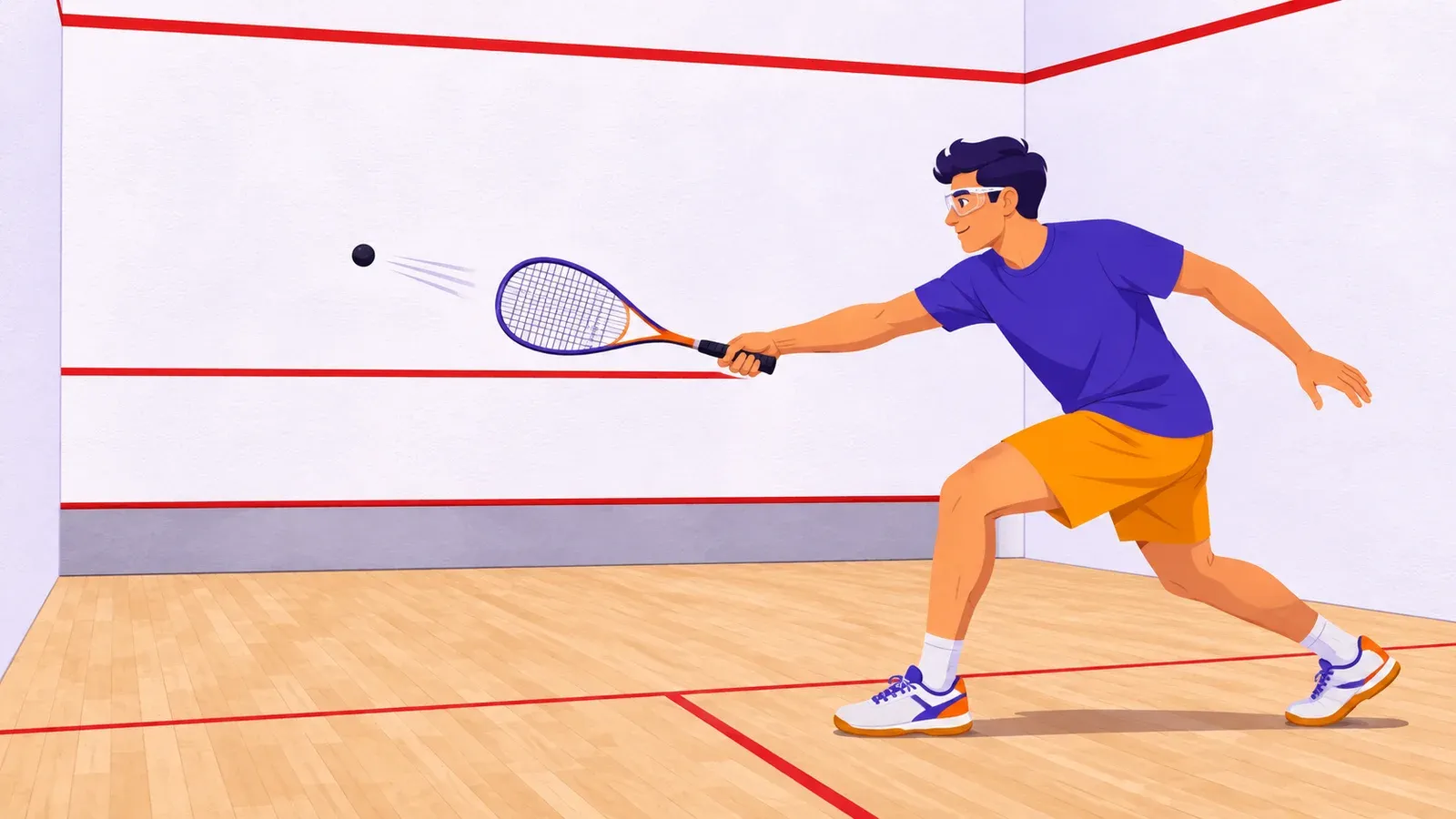
How to start squash with a coached first session
- Cost to start
- Session fee + any kit hire
- Difficulty
- Beginner
- First result
- Five controlled forehand shots
Group taster with borrowed kit; check the full local price
A coach helps with grip, spacing and controlled shots
Plan 45–60 minutes, including briefing, warm-up and rests
Book a beginner squash session, choose a bouncy ball and protective goggles, and practise controlled forehand shots before attempting a rally.
What you need to know
-
A booked beginner introduction
Ask for an adult group or coach-led first session. Confirm the total fee and whether court access, coaching, racket, ball and goggles are included.
-
A borrowed racket and beginner ball
Ask for a racket you can control and a bouncier introductory squash ball. A coach can help you choose before you spend money on either.
-
Squash-rated protective eyewear
Check that the goggles fit and ask whether the venue lends them. If you wear prescription glasses, ask about suitable over-goggles.
-
Clean court shoes and water
Wear comfortable clothes and clean, non-marking shoes that grip the court. Check the venue's footwear rule and bring water.
Squash is played on an enclosed court, with players sending the ball towards the front wall. Start with a coached introduction and one gentle shot at a time.
Learn the court before swinging
Follow the coach’s warm-up and let them check your grip and eyewear. Ask them to show you the low front-wall tin, the top boundary and where to stand or wait. A shot into the tin is too low; one on or above the top boundary is out. Agree on a clear swing and ball path before anyone hits. If another person enters either path, stop and ask the coach to reset the drill.
Hit one forehand at a time
From the coach’s chosen position, turn side-on and leave space between your elbow and body. Let a gentle feed bounce, then use a compact forehand to send the ball towards the front wall. Aim above the tin and below the top line. Stop after each attempt and reset instead of chasing a rally. If contact is inconsistent, ask the coach to adjust the feed or your position and give you one correction to try.
A ball that barely rises can make this much harder. Ask for a bouncier beginner ball instead of swinging harder. Keep your racket swing controlled and clear of people. If the floor becomes slippery or a movement hurts, stop and tell the coach.
Keep a small record
Count separately controlled forehands, aiming for five if comfortable. Record the number you managed and one useful correction, such as waiting longer for the bounce or leaving more space beside your arm. Five is a practice target, not a rally requirement. At the end, ask whether to repeat this drill or progress to a cooperative rally once your positioning is safe.

Prepare for your first session
- England Squash: equipment for your first sessionCheck what you can borrow and how to choose a beginner ball, court shoes and protective goggles in England.
- England Squash: what to expect at a group sessionRead about a coached introduction and use its session finder for options in England.
- Courter: free beginner squash videosRead Court awareness and Drop and drive for grip, court lines and the first fed forehand drill.
