
How to start surfing in a coached first lesson
- Cost to start
- £55 adult lesson example
- Difficulty
- Moderate
- First result
- Coached whitewater attempts
Cornwall, England; checked Nov 2026; travel and parking extra
Repeated paddling, balance and changing sea conditions
A prone glide counts; standing is not guaranteed
Book a beginner beach lesson, practise board position on sand, then try small broken waves with the instructor if conditions allow.
What you need to know
-
A suitable beginner booking
Book a staffed beach period. Check the coach's surf-teaching, rescue and first-aid qualifications, group size and weather policy.
-
Swimming confidence
Harlyn Surf School requires adults to swim 25 metres confidently. Tell the school about relevant health or access needs; pool distance does not prove sea competence.
-
School equipment
Use the school's soft-top board and wetsuit. Have the coach check their fit and the leash, then explain board handling.
-
Things to bring
Pack swimwear, a towel, sun protection and water. Allow for travel, paid parking and any refreshments.
A first surf lesson uses small broken waves. A prone glide counts; standing is not promised. Let the coach choose the conditions and shallow whitewater area.
Book a staffed first session
At Harlyn Bay in Cornwall, England, Harlyn Surf School’s beginner group lesson was £55 per adult when checked in November 2026. Board and wetsuit are included. The two-hour slot includes time at the school base; arrive 15 minutes early and allow time for changing. Check the current price, paid parking and cancellation terms before paying.
The school’s terms require adults to swim 25 metres confidently. If you cannot, take swimming lessons first. Harlyn’s 2026 RNLI public patrols ended 1 November. Book a confirmed future staffed period, then recheck lifeguards, school conditions and flags on the day. Reschedule the water lesson if the coach says the surf is unsuitable.
Follow the beach briefing
Ask the coach and lifeguards to point out the surf zone, entry and return route, rip currents, other hazards, and recall and help signals. At staffed beaches in England, black-and-white chequered flags mark the board-sport area; a red flag means stay out of the water. Let the coach fit your gear and show how to keep hold of the board without throwing it toward anyone. RNLI surfing guidance covers currents and board control.
Try a coached whitewater ride
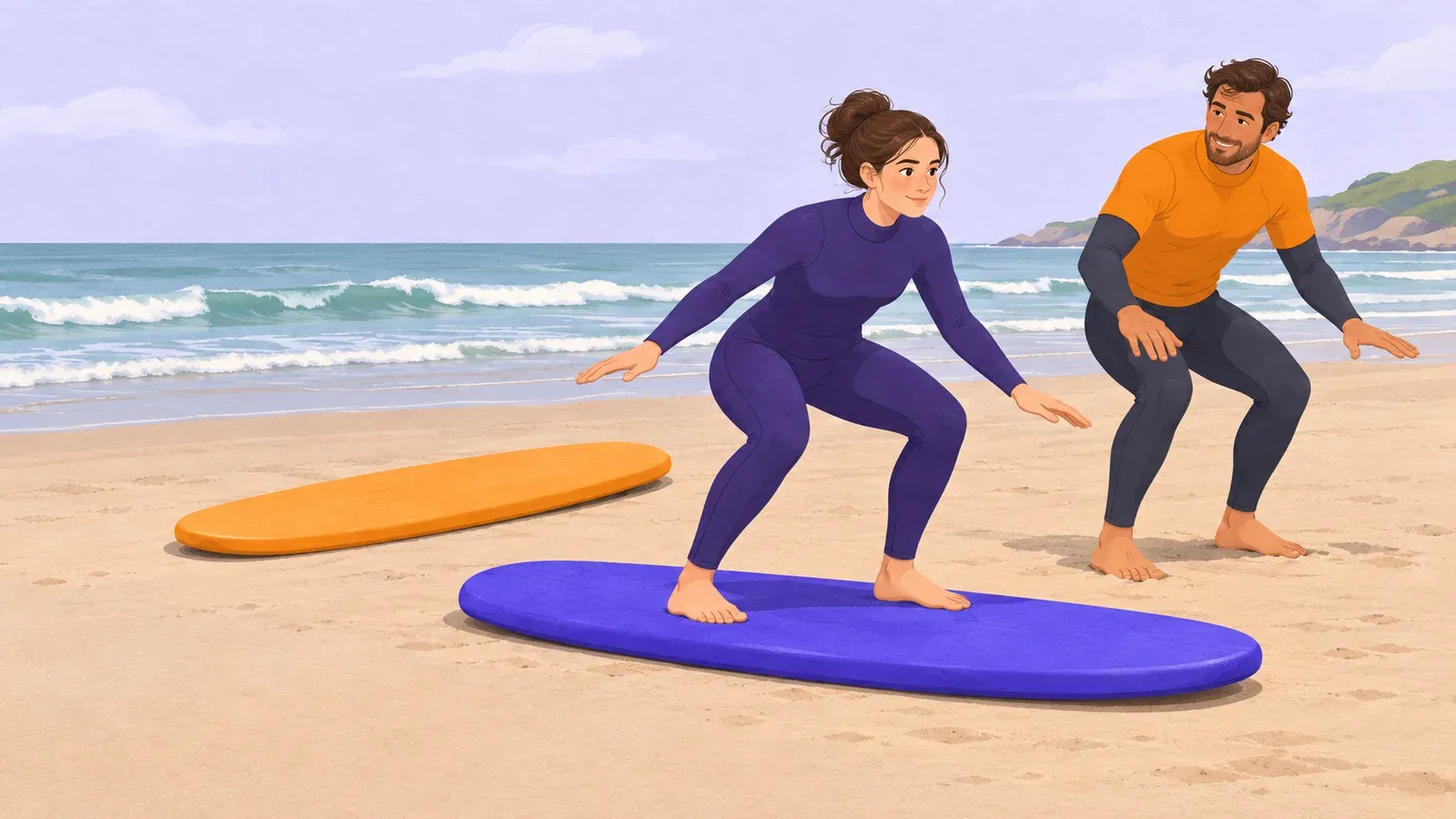
On sand, practise where to lie on the board, paddling, the coach’s move to a balanced stance, and how to fall without diving head first. Enter only when directed. Stay inside the coach’s boundary, wait for a clear path, then try a small broken wave and return by the assigned route. Ask for one correction between attempts. A shore drill prepares you for the water session; it does not replace it.
Stop and tell the coach if you are cold, exhausted, hurt or uneasy, or if conditions change. If separated or in difficulty, keep the board for flotation, raise an arm and shout for help; follow the session’s emergency plan. Leave with one skill to practise in another coached lesson before considering independent hire.

Lesson and beach safety
- RNLI surfing safetyRead about beginner equipment, currents, board control and what to do if you need help.
- Harlyn Surf School beginner lessonsCheck the current group lesson price, included equipment and arrival instructions.
- Harlyn Surf School termsCheck the swimming requirement, health disclosure and conditions for changing a booking.
- RNLI Harlyn Beach patrolsConfirm public lifeguard dates and the beach's listed hazards before choosing a session.