How to start swimming with an adult beginner lesson
- Cost to start
- Lesson fee with owned swimwear
- Difficulty
- Beginner
- First result
- One supported water skill
Ask about pool entry, block bookings and concession rates.
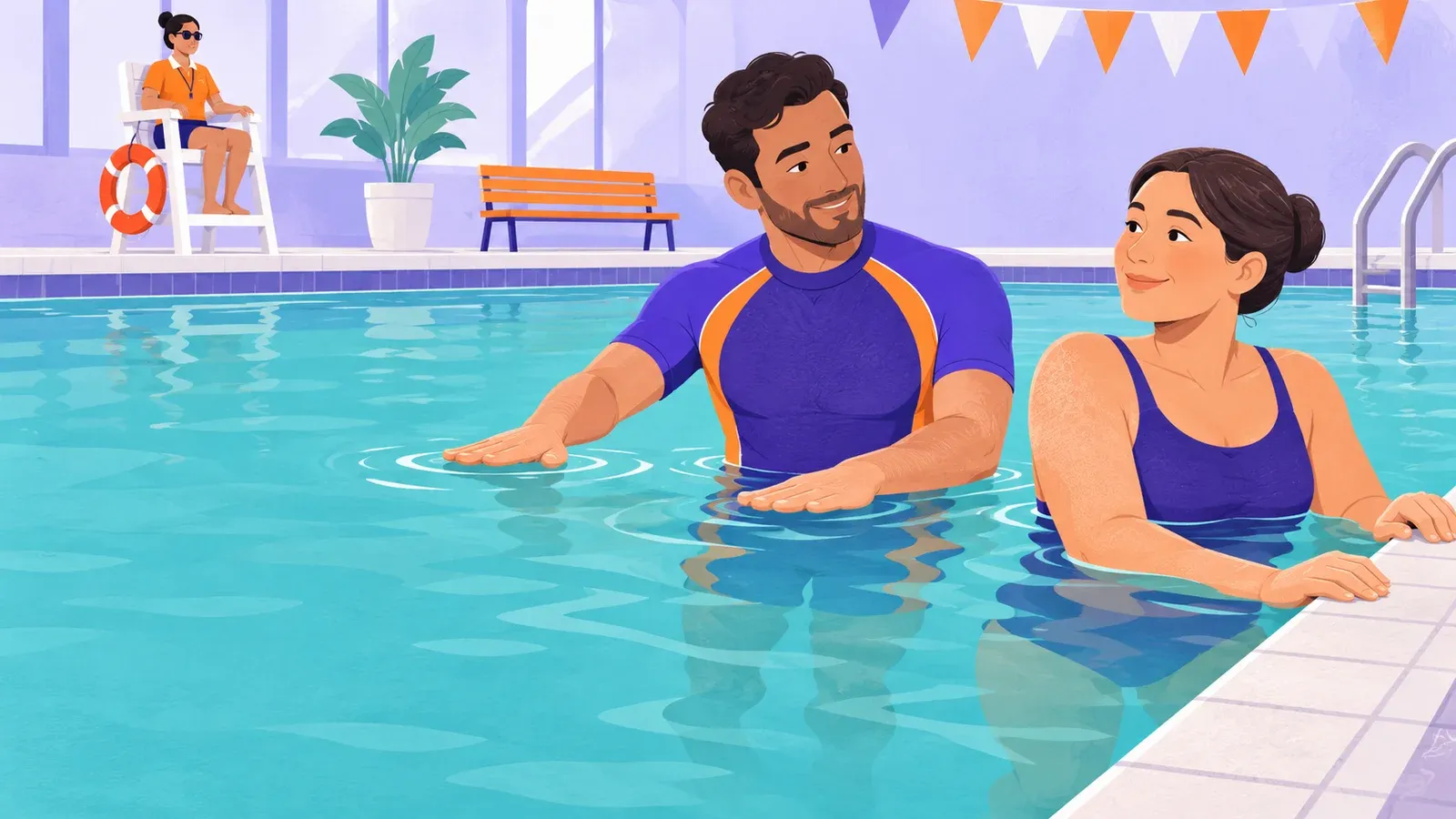
A teacher sets the pace and support for each water skill.
Allow time to change before and after the lesson.
Take a supervised class in a lifeguarded pool, practise one supported water skill at your teacher's pace and leave knowing what to try next.
What you need to know
-
The right first class
Book an adult complete-beginner lesson with a qualified teacher in a lifeguarded pool. Tell the provider you cannot yet swim independently and mention any anxiety, mobility, sensory or access needs so they can discuss support.
-
The full initial cost
Ask about the lesson fee, pool entry, required block or monthly payments, and any concession rate. Prices and availability vary.
-
Pool-ready basics
Bring pool-permitted swimwear and a towel. Ask the pool about goggles, caps, lockers and access arrangements. Use only teaching aids supplied or approved by your instructor.
For a first lesson, choose a qualified teacher at a lifeguarded pool for adult complete beginners. Swim England’s Be Water Confident stage is one example for nervous or new adults; short independent swimming is a later stage.
In Arizona (US), Valley of the Sun YMCA lists US$90 for a four-class adult beginner block for nonmembers (2026). Check your provider’s full initial charge.
Agree on support before entering
Tell the teacher what worries you and how you would like to signal a pause. Ask where you will work, what support they will provide and how to leave the water. Follow their demonstration of entry and exit. Stay in the area they choose. American Red Cross adult lessons describe gradual progress under a certified Water Safety Instructor in the US; your local programme may use different levels.
Practise one small water skill
Let the teacher pick and demonstrate a first task. It might be normal breathing while holding the pool edge, a gentle exhale at the surface, or a brief supported float followed by standing or returning to the side. Put your face in only when ready and with the agreed support. Repeat the chosen action at the teacher’s pace, then tell them how it felt. An instructor may use a teaching aid; ask what it is for before trying it.
If floating or face immersion feels too much, practise supported entry, exit or staying calm at the side instead. This still gives the teacher something to observe and build on. Tell them when you are frightened or tired; you need not complete every skill in one lesson.
Leave with a next task
Ask the teacher which action improved and how they want you to repeat it in the next supervised lesson. Name the support you still need. American Red Cross swim-safety guidance recommends lifeguarded areas and never swimming alone. One class does not make independent pool or open-water practice safe. Keep later practice within the teacher’s advice in a lifeguarded setting.

Adult lessons and pool safety
- American Red Cross adult lessons (US)Find the right beginner level and see how a certified instructor paces progress.
- American Red Cross swim safety (US)Review lifeguarded-area and never-swim-alone guidance before a first class.
- Swim England adult swimming stages (England)Understand the Be Water Confident entry stage and set a small goal with a teacher.