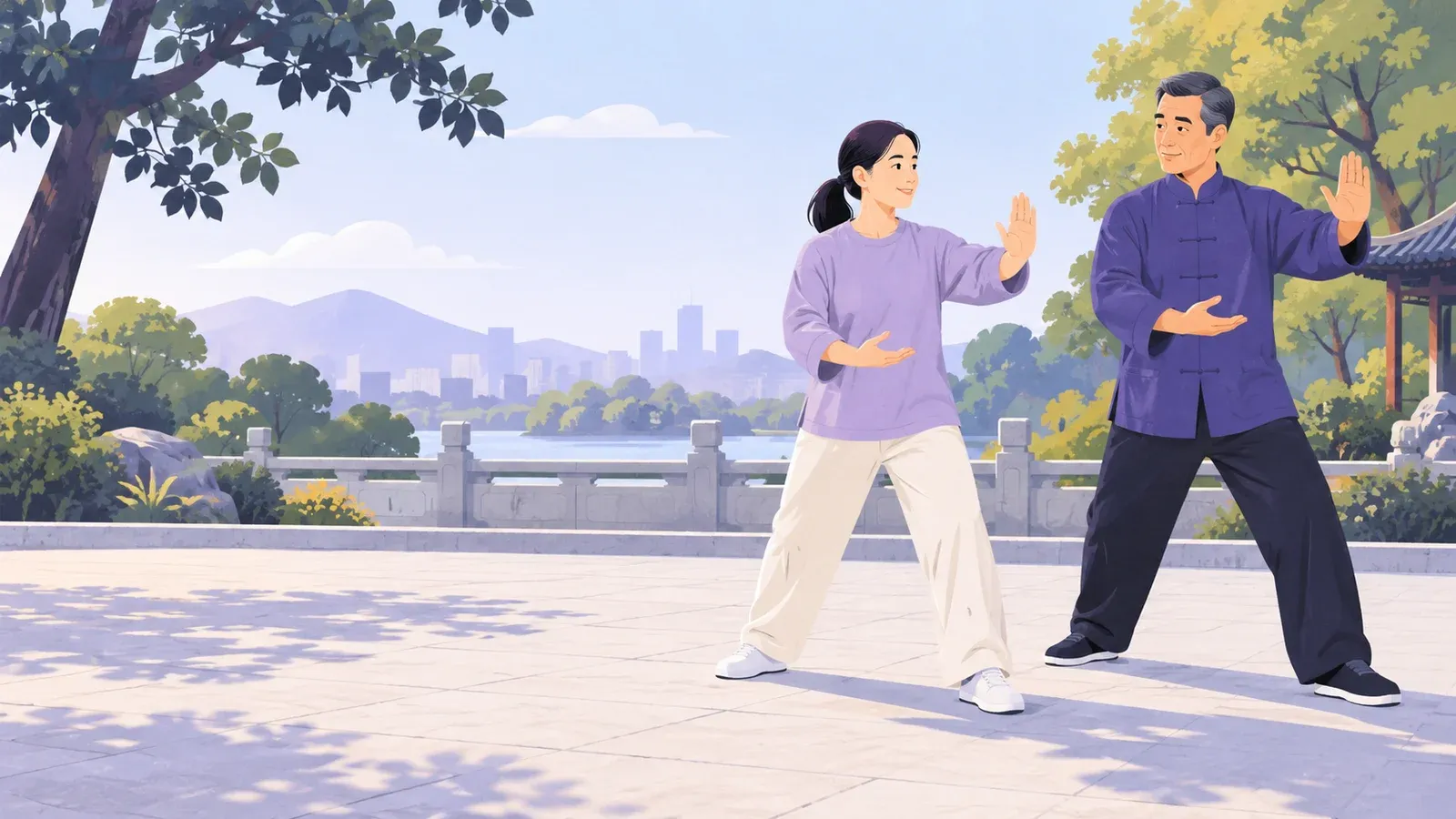
How to start tai chi with a short guided practice
- Cost to start
- US$0 with existing kit
- Difficulty
- Beginner
- First result
- One short guided practice
The linked first lesson is free; local class fees vary
Start with small movements and ask for help with balance
Repeat one opening movement and record a question for a teacher
Try tai chi with a beginner lesson, comfortable movements and a level outdoor space. Learn what to practise first and when to ask a teacher for help.
What you need to know
-
Comfortable clothes and shoes
Use loose clothing and well-fitting shoes you already own; no uniform or equipment is needed.
-
Level practice space
Choose a dry, clear terrace or paved area in mild weather, with room to extend your arms without hitting anything.
-
Beginner instruction
Use the linked free lesson on a stable screen, or attend a beginner class with a teacher who can adapt movements.
Tai chi combines slow, linked movements with attention to posture and breathing. It suits someone who enjoys repeating a movement and noticing small changes. Your first attempt can be a short section of a beginner lesson; learning a whole sequence takes longer.
Prepare for a comfortable attempt
If you have a condition affecting exercise, a recent injury or balance difficulties, ask your health professional what adaptations you need before starting. During pregnancy, discuss starting tai chi with your care team. The NCCIH overview explains these considerations. A teacher can help with technique; medical questions belong with your clinician.
Watch the lesson’s introduction before moving. Keep the screen at a comfortable viewing height so you can watch without turning your neck while holding a posture. If the outdoor surface is slippery or uneven, move to a clear indoor space.
Practise one movement
Follow the gentle warm-up in Dr Paul Lam’s first lesson, pausing whenever you need a rest. Then watch the first taught movement once before joining in. Keep your stance comfortably high and your movements small. Breathe normally without holding your breath or trying to match every movement to an exact count.
Repeat that movement a few times, then pause the video and try it slowly from memory. Keep your knees pointing in the same direction as your toes. Avoid twisting a knee over a planted foot or forcing a deeper bend to match the instructor. The Institute’s safety guide covers these precautions. If balance feels uncertain, stop and arrange instruction with suitable support or seated adaptations.
Stop for pain, dizziness or unusual breathlessness and seek medical advice as appropriate. Finish with the lesson’s gentle cool-down rather than adding difficult turns or kicks.
Give the next session a focus
Write down the movement you tried and one question, such as where your weight should be. Repeat the same lesson section next time. Before paying for a course, ask the teacher about their training, experience with beginners and how they adapt movements. A first class should leave room for questions and rests.

Prepare and follow a lesson
- NCCIH tai chi overviewRead the evidence and safety guidance before choosing a practice for your circumstances.
- Tai Chi for Health Institute safety guideCheck precautions for comfortable movement, practice conditions and joint alignment.
- Dr Paul Lam's free beginner lessonFollow the introduction, warm-up, first movements and cool-down at your own pace.