How to start trainspotting with a simple train log
- Cost to start
- Free with existing kit
- Difficulty
- Beginner
- First result
- A short spotting log
Assumes free access; travel or tickets may cost
Start with familiar passenger trains in daylight
Allow 30–45 minutes; services can change
Choose a permitted public viewpoint, watch passing trains, and build a small observation log without buying a camera or getting close to the tracks.
What you need to know
-
Take a simple log
Bring a notebook and pen or a charged phone. Prepare fields for time, place, direction, operator, visible number, and notes; a camera is optional.
-
Confirm a public viewpoint
Choose a place outside the railway boundary with room to stand without blocking others. Check access and your return route; a photo of someone else's spot is not permission to use it.
-
Plan for the conditions
Go in daylight with clothing for the forecast. Check current passenger services, and ask staff about access and photography before using a station. Tell someone your plan if going alone.
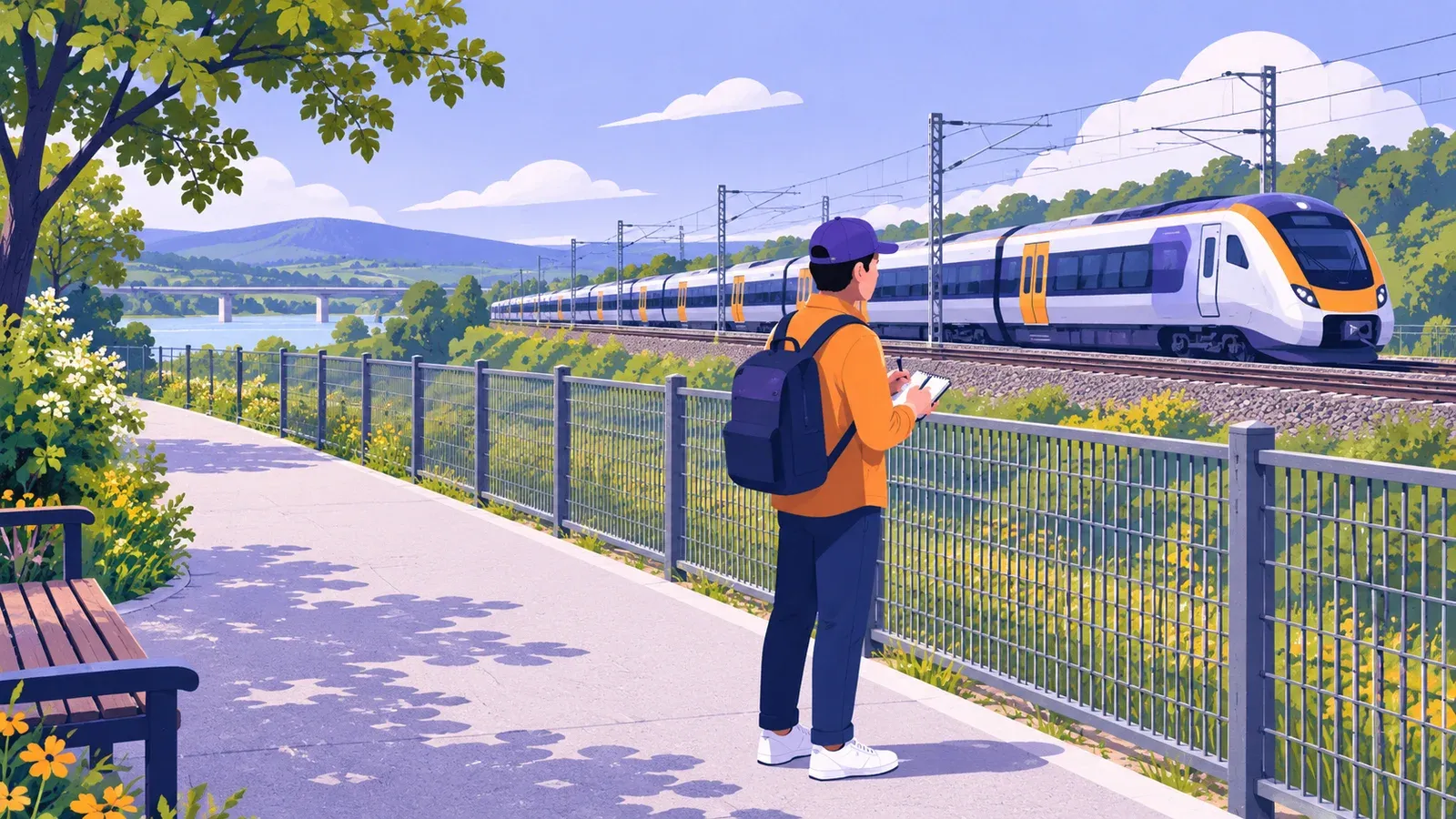
If you like noticing vehicle details, watch passenger trains from one permitted place and record what you see. No camera is needed.
Pick a place and time
Choose a broad public area outside the railway boundary, with room to stand clear of others. Do not watch from a level crossing or take shortcuts through railway land. If access, footing, or visibility is uncertain, choose another spot.
Use local passenger service information to pick a likely time. In Great Britain, National Rail live departures shows station arrivals and departures, though services can change. For a station visit, ask staff where to stand and whether you need a ticket. National Rail’s Great Britain guidance covers station access and photography; elsewhere, check local railway rules.
Watch, then make an entry
Stay put as a train passes. Never cross a railway boundary, climb a fence, or lean over a barrier for a better view. On a permitted platform, stay behind its safety line and follow staff instructions. Keep paths clear, avoid distracting crews, and leave camera flash off.
After it passes, record time, place, direction, recognizable operator, legible vehicle number, and a short description. Leave uncertain fields blank. Where allowed, a phone photo from your permitted spot may help later; never step backward while framing it. Do not record a scheduled train as personally seen.
Check one identification afterward
Compare a clear note or photo with the operator’s fleet guide. Northern’s train-type page is an England example. Colour alone may not identify a vehicle; keep later identification separate from what you saw.
If no train passes, finish at your planned time and check service status before trying again. Next time, use the same permitted spot or another, and learn one train type you can verify.

Plan, watch and identify
- National Rail enthusiast guidance (Great Britain)Check station access, platform behaviour, and personal photography rules in Great Britain.
- National Rail live departures (Great Britain)Check passenger arrivals and departures before choosing when to watch in Great Britain.
- Northern train types (England)Compare photos and class names for trains used by this operator in England.
