Try triathlon with a coached bike-to-run changeover
- Cost to start
- Free club trial example
- Difficulty
- Beginner
- First result
- One bike-to-run changeover
Own or borrowed kit. Confirm transition, fees and loans
Comfortable riding, braking and dismounting come first
Allow a coached session for setup and retries
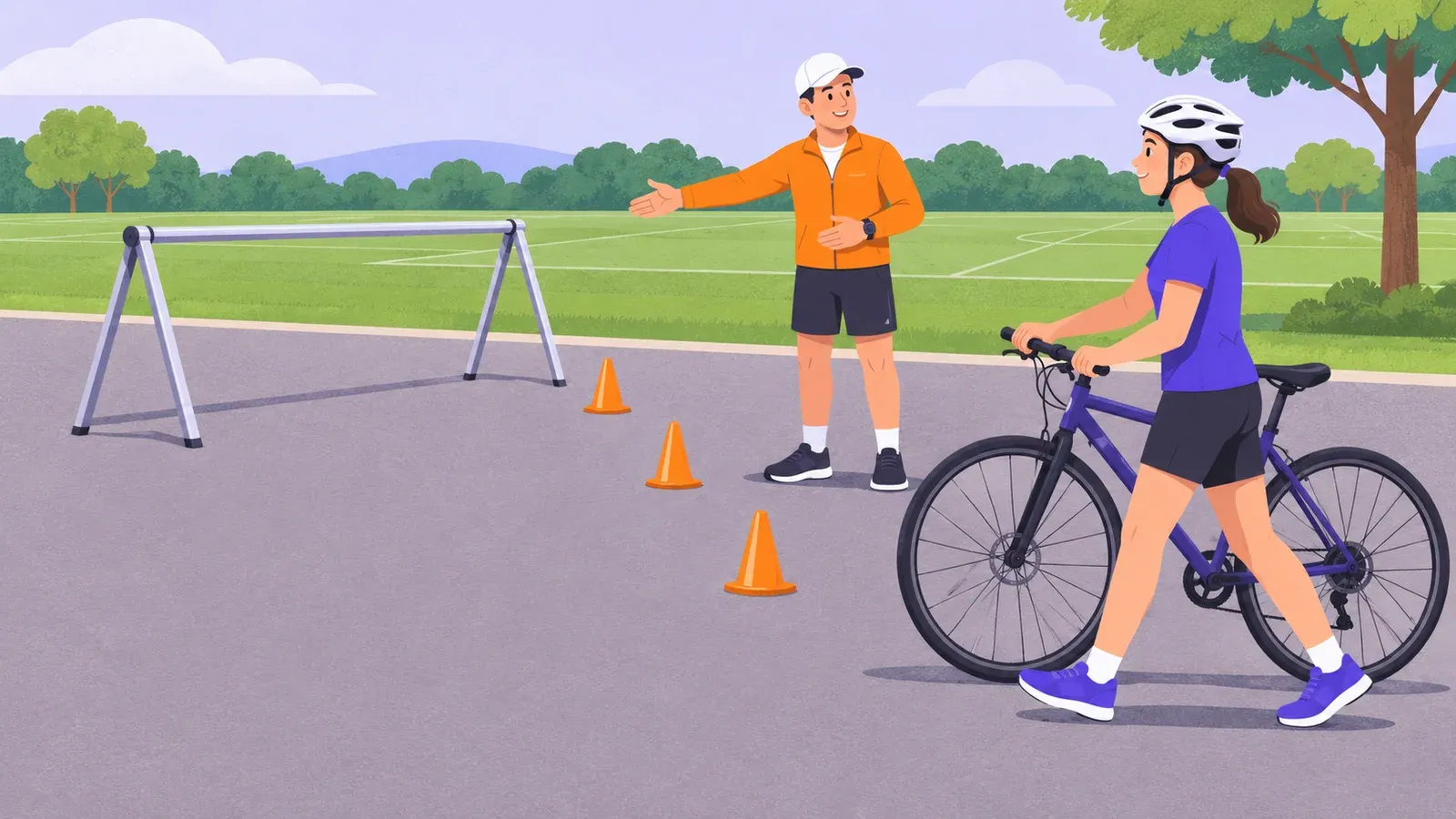
Practise a short bike-to-run changeover with a coach, from stopping before the dismount line to racking the bike and leaving on foot for an easy run or walk.
What you need to know
-
A confirmed adult coaching session
Confirm that an adult trial can include bike-to-run practice, and ask about price, kit loans, accessibility and weather.
-
A bike you can already control
Bring a roadworthy bike with flat pedals, working brakes and tyres, a fitted undamaged helmet, trainers and sports clothing. Flat pedals let you keep the same trainers for the run. Ask the coach to check the bike and helmet before riding.
-
A clear practice area
Arrange a permitted traffic-free space, stable rack, marked routes and water. The coach sets the pace.
Try the changeover before a race
A triathlon follows swim, bike, run. T1 is the swim-to-bike change. T2 is the bike-to-run change. Practise T2 with a coach after you can ride, brake and dismount comfortably. Otherwise, take a bike-skills session first.
Bicester Triathlon Club in England, UK, advertised three free training trials in November 2026. These do not guarantee T2 practice or a bike and helmet loan. Ask what the coach can cover, what to bring and whether the venue charges. The low-cost route needs existing or borrowed kit. Travel, later membership and race entry cost extra.
Walk the route, then practise the order
Walk with the coach from the dismount line to the rack and run exit. Check where others may cross. Rehearse the order stationary, then check brakes, tyres and helmet fastening. For example, ask the coach to adapt roughly five minutes of easy riding and two minutes of walking or jogging.
Ride easily on the agreed route. Stop fully and step off before the line. Walk the bike to the rack with your helmet fastened. Secure it as shown, then unfasten and remove the helmet. Keep kit out of the path. Do not ride in transition or try a flying dismount. The Southport 2026 race pack gives this order for one British event. Follow your coach’s setup here and each event’s own briefing later.
Leave on foot and choose the next practice
Take the run exit for the agreed easy walk or jog. Start gently. Walk or rest if effort climbs too high. Stop and tell the coach about pain, dizziness or feeling unwell. Repeat only if comfortable and the coach agrees. Note one awkward step, without timing yourself.
Next, arrange coached swimming in a lifeguarded pool and discuss a gradual plan across all three sports. Open-water swimming needs separate preparation and supervision. Before an event, read its current briefing for distances, access, equipment and routes. The UK Triathlon FAQ shows one organiser’s pool options and kit expectations.

First-session and transition guides
- Bicester Triathlon Club free trialRequest an adult beginner trial in England and ask whether transition practice and equipment can be arranged.
- UK Triathlon beginner FAQCheck ordinary kit, pool-based options and this UK organiser's event requirements.
- Southport 2026 transition instructionsRead one British event's dismount-line and helmet rules on page 11 before practising the order.
