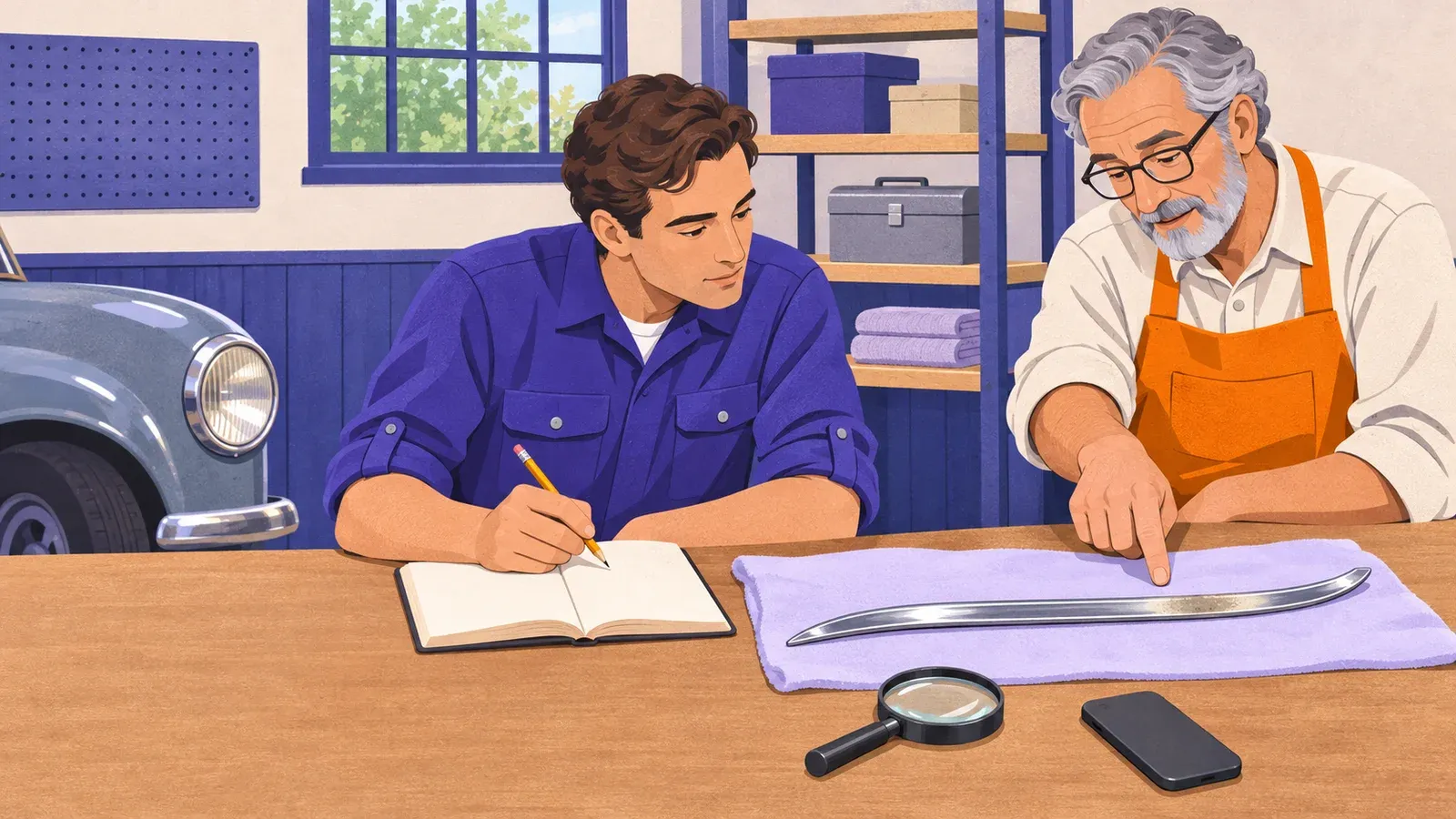
Classic car restoration: assess one trim component
- Cost to start
- US$200 membership; bench extra
- Difficulty
- Beginner
- First result
- Condition sheet and task plan
Sacramento, USA; US$10/hour space; confirm mentor fee and extras
A mentor selects the part and guides the assessment
Agree a short appointment plus induction before paying
Arrange a mentor-led workshop visit, document one detached trim part and choose a manageable next task before cleaning, buying tools or dismantling a car.
What you need to know
-
A mentor and the owner's permission
Confirm non-owner access and supervised inspection of a member's part.
-
A prepared decorative part
Ask for an already-detached trim strip and padded bench.
-
A condition sheet
Bring a notebook and phone; confirm permitted measuring aids.
Start with a careful record of one part. Leave with a condition sheet and one agreed next step.
Arrange the bench visit
Ask a classic-car club whether a mentor can supervise you without your owning a car. Propose roughly an hour to inspect a member’s detached decorative trim strip, plus induction. Confirm the owner’s permission, a prepared part and padded bench, photo and measuring access, handling rules, mentor availability and full charge before joining. Sacramento DIY Classic Car Club in California, USA welcomes newcomers but does not advertise this particular lesson.
Its fee page, checked November 2026, lists US$200 annual membership and US$10 per hour for temporary workspace. Experienced helpers can charge for their time. Request a full quote. The proposed hour is your scope, not a published class length.
Record what you can see
Keep the part supported. Date and reference your sheet; note the owner, reported car and part, and evidence for that identification. Leave material and finish unknown without evidence. Silver colour does not identify the metal.
Photograph the whole face with your reference beside it, not taped on. Ask the mentor to reposition the strip for its back and mounts. Add a ruler if permitted. Mark dents, scratches, pits, lifting finish or missing decorative clips on a sketch or annotated photo. The museum’s condition-reporting guide shows how to pair dated notes with photographs.
If a mark is unclear, inspect another angle with the mentor. If it remains unclear, record “unresolved” and its location. Do not rub or scrape it. Canadian Conservation Institute guidance explains why pits and lifting plating may need specialist assessment; its vehicle-care guide warns that careless handling and cleaning can damage finishes.
Choose one next task with the mentor and owner, such as identifying a replacement decorative clip from a parts diagram before buying it. Record supervisor, tools, likely time and cost, and a pause point. Leave cleaning for later. Stay at the designated bench, follow protection rules and ask the mentor to handle sharp or unstable areas.

Arrange and document a component assessment
- Sacramento DIY Classic Car ClubCheck this California club's beginner enquiry route, then ask whether a supervised non-owner visit is possible.
- Sacramento club fees and workshop FAQCheck membership, hourly workspace and any charge for experienced help before requesting a full quote.
- American Museum of Natural History condition reportingUse its identification, written observation and photo structure for a simple component record.
- Canadian Conservation Institute corrosion guideSee why pitting or lifting plating warrants assessment before any treatment.
- Canadian Conservation Institute vehicle careRead how handling and careless cleaning can damage vehicle finishes and small parts.