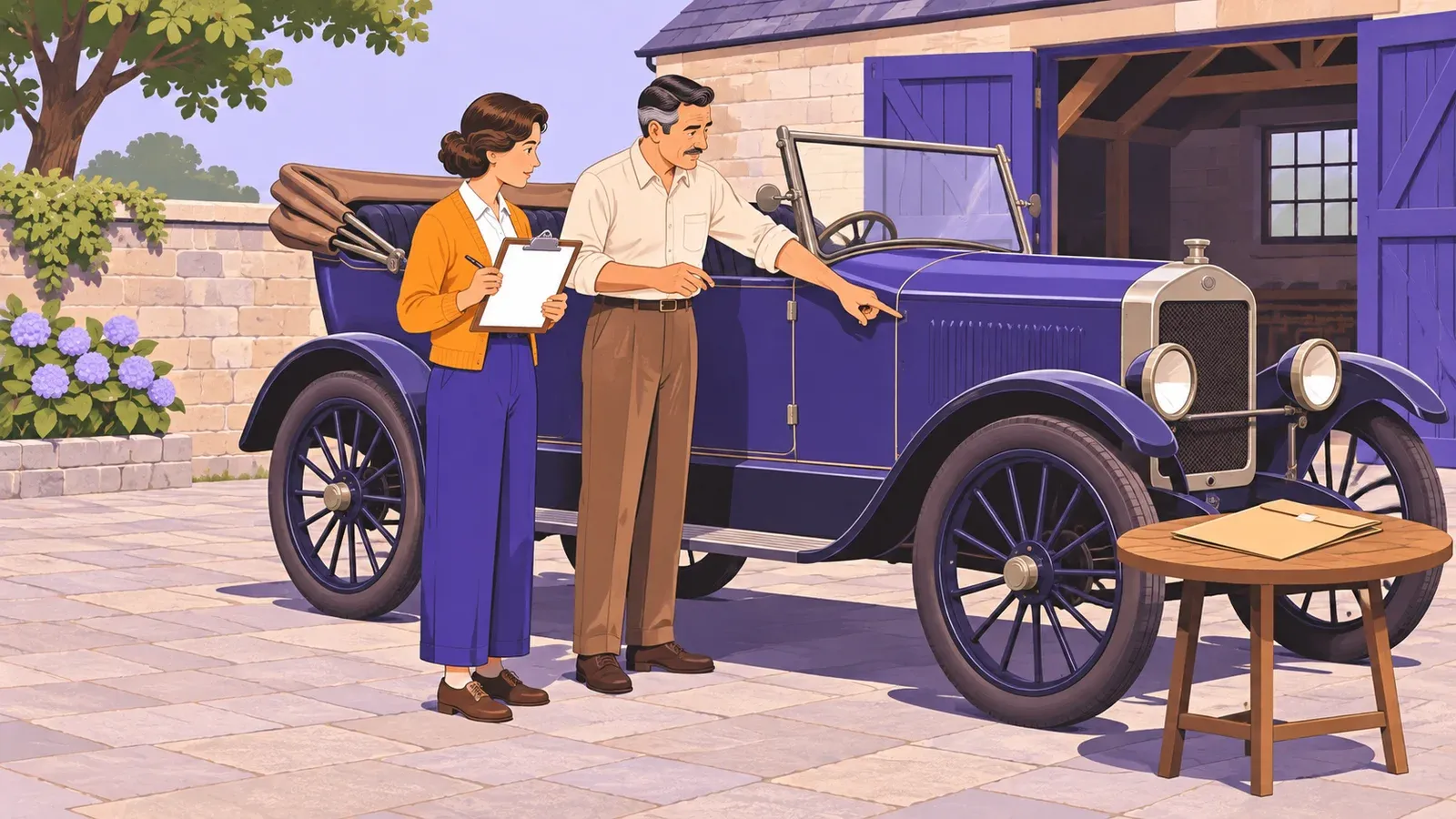
Vintage cars: assess your first collection candidate
- Cost to start
- £400–800 inspection estimate
- Difficulty
- Beginner
- First result
- One specialist viewing
UK estimate; car, your travel and ownership costs extra
A specialist handles the technical assessment
Complete a dated candidate file
View one potential vintage car with an independent specialist, compare a history claim with evidence and make a dated candidate file before considering a purchase.
What you need to know
-
One realistic candidate
Choose a model you could store and care for. Ask a relevant club about known concerns and parts support before arranging an inspection.
-
An independent specialist
Confirm experience with that era, a written report, the complete fee and permission from the seller for you to attend and photograph agreed details.
-
Documents and a candidate file
Request registration, sale and history papers, restoration invoices and older photos. Bring a notebook or phone and date the file.
-
A safe stationary viewing
Arrange a dry, well-lit place and suitable shoes. Leave panels, lifting, engine checks and any road test to the owner and specialist.
For this guide, use the UK Vintage Sports-Car Club’s definition: a vintage car has a specification dated 1919–1930. View one potential purchase with a specialist, then make a dated candidate file. The result is a reasoned next step, not an owned car.
Arrange an independent viewing
The VSCC welcomes non-owners; members can research pre-war adverts and its history archive. Ask a relevant club about the model, then find an inspector experienced with its era. The Federation’s assessor listing offers one enquiry route. Confirm independence from the seller, scope, attendance, a written report and an itemized fee.
The £400–800 figure is a UK planning estimate for one local viewing, document checks, written findings, tax and the assessor’s travel. It excludes your travel, the car and future care. If the quote exceeds your budget, defer the viewing rather than dropping important checks.
Record claims, observations and gaps
Beside the stationary car, date your file and enter the advertised make, model, specification year and price as seller-stated. With permission, photograph the whole car and accessible details. Ask the specialist to locate chassis and engine identifiers and compare them with the paperwork; do not assume a modern VIN format. Record visible corrosion, damage, replacements and missing parts, then note the specialist’s assessment separately.
Choose one history claim, such as a restoration date. Compare it with a dated invoice or photograph. Mark the claim supported, seller-stated or unresolved, and save the evidence source. Ask which areas were not inspected. Do not scrape identifiers, crawl beneath the car, start its engine or try unfamiliar controls. Any workshop work or road test belongs with the specialist under appropriate permission and cover.
Add estimates for secure storage, transport, insurance, servicing and repairs; check parts availability. Use UK vehicle checks and historic-vehicle rules when assessing paperwork and obligations; a registration certificate is not proof of ownership, and MOT or tax treatment depends on the vehicle. Reject or defer the candidate whenever needed. Commit to purchase only after identity, title and material condition questions are resolved.

UK clubs, inspection and paperwork
- VSCC membership and history researchSee how non-owners can join the UK club and how members use its pre-war adverts and history archive.
- Historic-vehicle assessor exampleFind an independent inspection enquiry route and ask about the chosen car, report and fee.
- UK vehicle identity and document checksCompare UK registration details and the car's identifiers with its paperwork before purchase.
- UK historic-vehicle rulesCheck how age and substantial changes affect a UK historic vehicle's MOT and tax position.