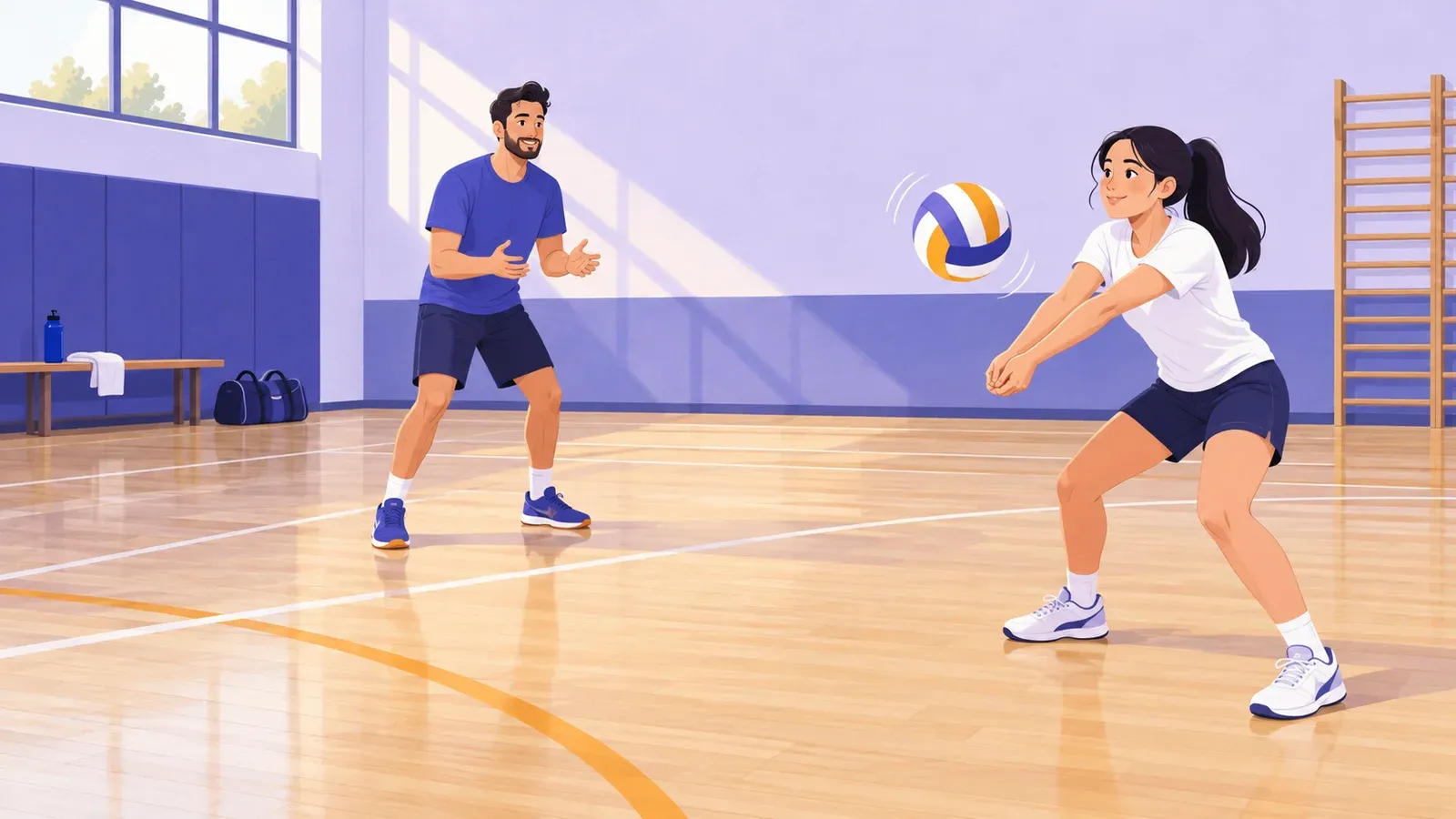
How to start volleyball with partner passing
- Cost to start
- Borrowed ball + venue fee
- Difficulty
- Beginner
- First result
- Ten passing attempts each
Ask about ball loans, access and any charge before visiting.
Gentle feeds keep the first attempt manageable.
Catch and reset after each pass, then swap roles.
Try indoor volleyball with a partner, a borrowed ball and gentle tosses. Learn a forearm pass, count controlled returns and find a beginner session.
What you need to know
-
A partner and permitted space
Check booking and fees for a dry indoor sports area with room away from walls, furniture and other groups. No net is needed for this drill.
-
A suitable volleyball
Borrow one if available. Ask staff about a lighter training ball if contact feels hard; do not substitute a basketball.
-
Shoes and free forearms
Wear grippy sports shoes and clothes you can move in. Remove a watch or wrist jewellery before passing.
Indoor volleyball asks teams to keep the ball off the floor and return it over a net. Start with one gentle toss, one forearm pass and a catch. This is a drill, not a rally. Volleyball England explains that catching is not an ordinary game contact.
Set up the pass
Walk and move your arms comfortably, then toss and catch a few times. Stand two to three metres apart with room around you. One person feeds; the other passes. Agree on a ready signal.
Face the feeder with feet roughly shoulder-width apart and knees soft. Watch the ball, move toward the feed and settle before contact. Join your hands with thumbs side by side, elbows comfortably straight and inner forearms together. Hold this flat platform in front of you. USA Volleyball’s passing advice stresses balanced footwork and a steady platform angle.
Toss, pass, catch and reset
The feeder tosses gently underarm, aiming for waist height in front of the passer. Meet the ball with both forearms just above the wrists. Tilt the platform toward the feeder and let it rebound upward without a large arm swing. The feeder catches the return; both reset. Let an unreachable toss drop and retrieve it when clear. Do not dive into another group’s space.
Give one passer ten tosses, then swap for ten more: twenty attempts total. Misses count. Record a controlled return when the feeder can catch it within one comfortable step; this is a practice check. If passes fly sideways, check for even contact across both forearms. If they overshoot, swing less or soften the toss. If they fall near your feet, angle the platform upward. Move closer if control is poor. Stop if contact hurts; ask a coach to check the ball and contact point.
For serving, receiving a real serve and rallies, join a beginner group. In England, Volleyball England’s club finder can help; ask about adult beginner places, equipment and fees. Elsewhere, ask a local recreation centre or association.

Learn the pass and find a group
- USA Volleyball: five keys to better passingUse the indoor players' advice on balanced footwork and a stable platform angle.
- Volleyball England: how the game worksRead a short introduction to the net game and how teams keep the ball in play.
- Volleyball England: find a clubFind clubs in England, then ask about adult beginner sessions, fees and equipment.