
Weightlifting: take your first coached lesson
- Cost to start
- US$70 session example
- Difficulty
- Moderate
- First result
- One coached lesson
Shrewsbury, MA, 2026-11-17; ask for your full local quote
Learn a new receiving position with coach feedback
A comfortable clean-position drill and one usable cue
Learn the clean receiving position with a dowel or light training bar in an adult beginner lesson, then leave with one cue and a coached next step.
What you need to know
-
A beginner weightlifting lesson
Book an adult session with a coach who has a sport-specific coaching qualification and experience teaching complete beginners.
-
Club equipment and space
Ask for a dowel or suitably light training bar and a clear platform; a full-size empty bar may still be too heavy to start with.
-
Clothes, shoes and water
Wear clothes you can move in and secure closed shoes with firm soles and grip. Bring water.
-
A place to record one cue
Use a notebook or notes app to remember the drill, the implement you used and your coach's next instruction.
Olympic weightlifting has two competition lifts: the snatch, and the clean and jerk. Start with the clean’s receiving position and one cue to use next time.
Book a lesson that includes teaching
In Great Britain, the British Weight Lifting club finder lets you filter for Olympic weightlifting. Elsewhere, ask a local club who teaches beginners. Check that your booking includes coaching; an open-gym ticket may only grant platform access.
Ask about lesson length, supplied equipment, entry, induction or membership charges, and the cost of continuing. Wormtown Weightlifting in Shrewsbury, Massachusetts, USA, listed one-to-one beginner sessions at US$70 per session on 17 November 2026. Get your club’s full initial quote.
Disclose injuries or movement limits. If a chronic condition or safety concern affects starting exercise, seek healthcare advice first.
Practise the receiving position
Follow the coach’s warm-up and movement checks. Use a clear platform. Ask how to return the implement safely and what to do if a lift is lost; stay clear of neighbouring lifters.
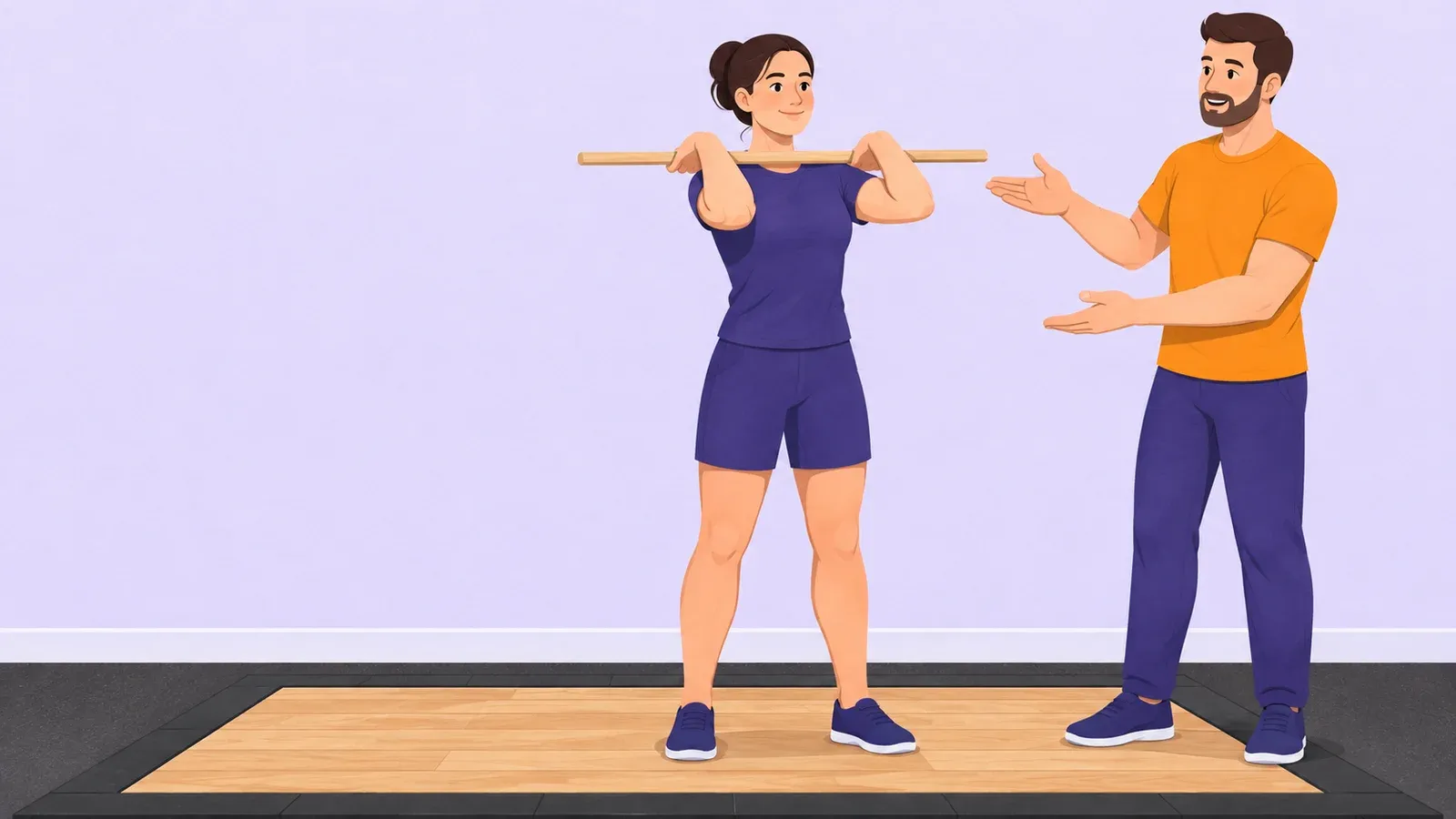
Practise the front-rack position with the chosen dowel or light bar. It rests across the fronts of your shoulders, elbows forward, rather than hanging from your wrists. Have the coach fit your grip and position. The Catalyst Athletics demonstration shows the rack; do not force your wrists or elbows to copy it.
Repeat short attempts, resetting each time and using one cue. If movement stays comfortable and controlled, the coach may add a light clean drill from the upper thigh into the rack. Otherwise, stay with the position drill and ask what to practise next.
If any movement hurts, the implement hangs in your hands, or control slips, stop. Ask the coach to adjust the grip, implement or drill. Do not add weight or force a deeper catch. Record the drill and one useful cue, then book another coached session.

Club search and clean position
- British Weight Lifting club finderSearch Great Britain clubs by postcode and Olympic weightlifting, then ask about adult beginner teaching.
- Catalyst Athletics clean rack positionPreview the shoulder-supported receiving position in a video with written instructions before your coach fits it to you.
- British Weight Lifting introductory workshopRead what the coached practical session covers before deciding whether to book it.
