Quote a woodworking commission with a tested tray
- What it pays
- Example US$120 gross per tray
- Cost to start
- About US$70 sample supplies
- Difficulty
- Moderate
- First result
- Checked tray sample and quote
US$90.44 after materials and card fees, before labour and overhead
Wood, finish, tools, insurance, fees and rework
Needs safe woodworking and a proven box design
Confirm size, finish and payments
Check a poplar desk-tray sample, approve dimensions and finish, then quote a local Oregon commission with written changes.
What you need to know
-
Proven small-box skills
Know solid-wood box joinery and wood movement.
-
Dust and finish controls
Capture dust at source. Follow finish ventilation and protection.
-
A dimensioned sketch
Mark outside/inside sizes, stock thickness and finish.
Make one sample before quoting
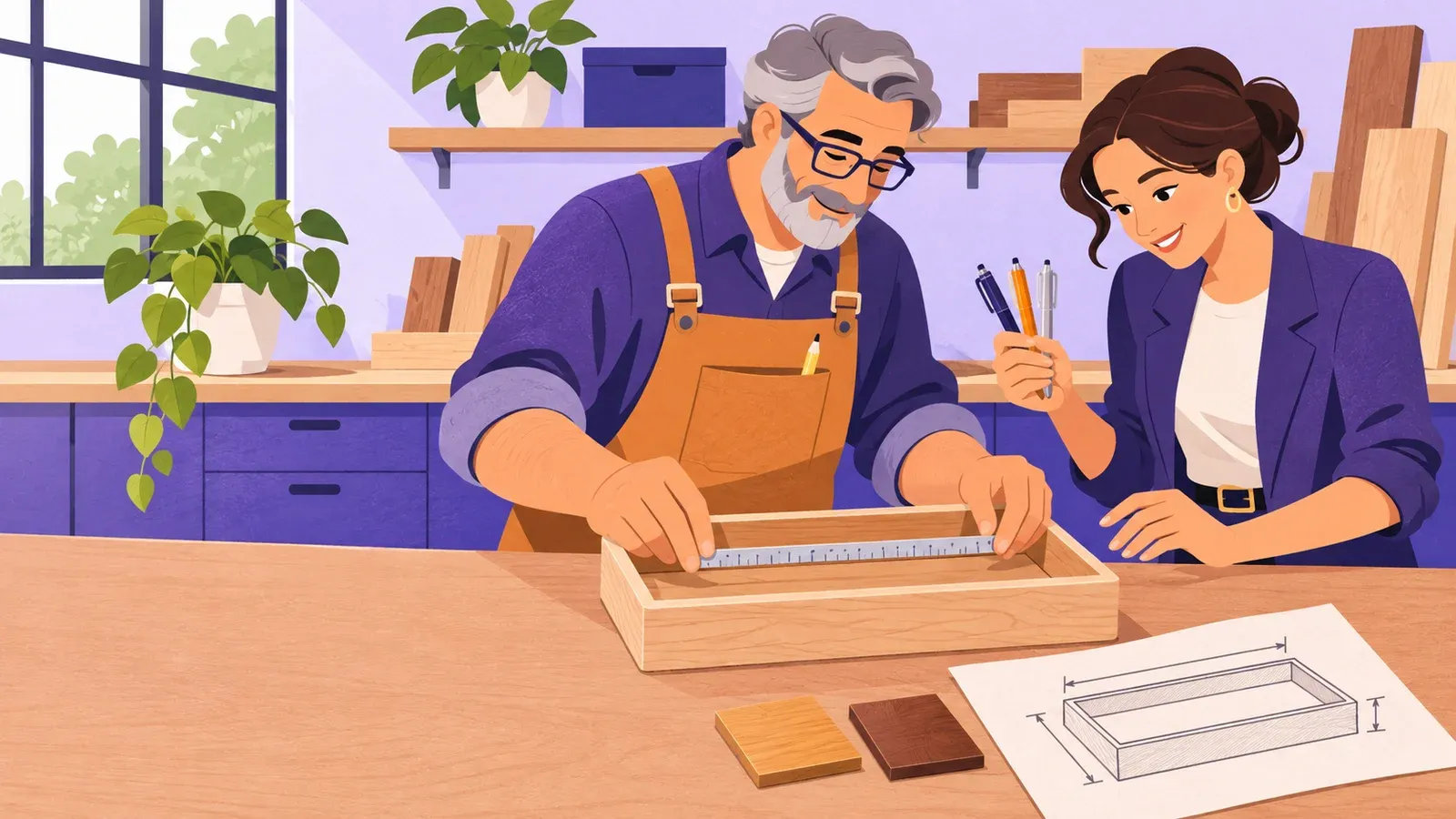
Make a solid-poplar stationery tray for an adult Oregon, USA home-office buyer. Start with 12 × 8 × 2 inches outside. Draw usable inside space using measured board thickness. If the buyer meant 12 × 8 inches inside, revise the sketch and price before cutting.
Build the sample. Dry-fit for squareness, then follow adhesive directions. Check rocking, joints, splinters and pen fit. Correct defects. Log material and time. Use only tools you are trained to operate, with guards, supported work, dust extraction and suitable eye/hearing protection.
Brush General Finishes High Performance Satin on a matching offcut. Show the buyer real wood and finish. Follow preparation, recoat and safety directions. If it streaks, let it dry, correct and retest. Apply the approved finish to the tray, then allow its 21-day full cure under recommended conditions before packing.
Agree the commission in writing
Before buying stock, agree in writing on outside/inside sizes, finish, price, deadline, pickup, payments, cancellations, returns, care and defect contact. Check Oregon zoning/registration and insurance. For a new divider, get written approval of revised sketch, price and date before cutting. Fix defects. Give a receipt and care note, collecting the balance after inspection and before pickup.
Cost the sample and one order
Sample supplies are about US$70: assumed US$30 poplar + US$29.99 finish pint + assumed US$10 glue, abrasives, pads and packing. Reprice locally, including sourcing/shipping. Finish remains for later jobs.
An illustrative US$120 quote is US$25 assumed consumed supplies + 3 active hours × US$25 labour target = US$75 + US$20 fees/overhead/rework allowance. Hours cover intake, sourcing, making, finishing and handoff. Recalculate from your sample time and material receipts. Prototype work and elapsed cure are extra. Request US$60 deposit and US$60 balance within that price.
Two US domestic online-card payments through Square Free at 3.3% + US$0.30 each cost US$4.56. US$120 gross − US$25 consumed supplies − US$4.56 fees = US$90.44 contribution before labour, workshop overhead, insurance, prototype/setup and tax. After reserving US$75 labour, US$15.44 remains for the rest, not profit. Oregon has no general sales tax for local pickup.
Finding your first clients
-
Show the local sample
Ask what stationery must fit.
-
Ask for a local introduction
Seek a coworking introduction where allowed.
-
Send a bounded proposal
Share the sketch, sample and terms.
-
Request a referral after handoff
Request permission for a photo or referral.

Work safely and test the finish
- CCOHS woodworking safetyReview guards, supported work and task-appropriate eye and hearing protection.
- HSE wood-dust guidanceCapture wood dust at its source rather than sweeping or blowing it around.
- General Finishes High PerformanceFollow current preparation, application, correction and full-cure instructions for the example finish.
Quote and collect locally
- Square US invoice pricingCheck the domestic online-card fee used for the deposit and balance example.
- Square invoice depositsSplit one agreed quote into a deposit and remaining balance.
- Oregon sales-tax guidanceCheck the absence of general Oregon sales tax for this local pickup example.
- SBA launch guidanceCheck local business setup and insurance needs before paid woodworking.