How to start worldbuilding with one fictional village
- Cost to start
- $0 with paper or a device
- Difficulty
- Easy
- First result
- 45-60 minutes
Specialist worldbuilding and map software are optional
Connecting a few ideas is manageable; consistency takes revision
A rough map, linked setting notes, and one tested disruption
Sketch a small fictional place, connect its food, water, work, and travel, then test an everyday disruption to find gaps before expanding the setting.
What you need to know
-
Use one page of notes
A notebook or basic document is enough; keep a dated copy when changing established details.
-
Choose a small boundary
Begin with a village, island settlement, or neighborhood that you can describe without inventing a whole planet.
-
Keep the map rough
Pencil, paper, and simple symbols can show homes, water, food sources, and routes; drawing skill is optional.
-
Track decisions and questions
Separate settled facts from possibilities, and record sources when real geography, technology, or cultures inform your choices.
Worldbuilding suits people who enjoy asking how an imagined place works. You can develop a setting for its own sake, a game, or a future story.
Choose a premise and connect daily needs
Write one sentence: “A riverside village depends on a single bridge to reach its fields.” Change the premise if another location interests you.
Answer four questions in short notes: Where does drinking water come from? How do people get food? What work supports the settlement? How do people and goods travel?
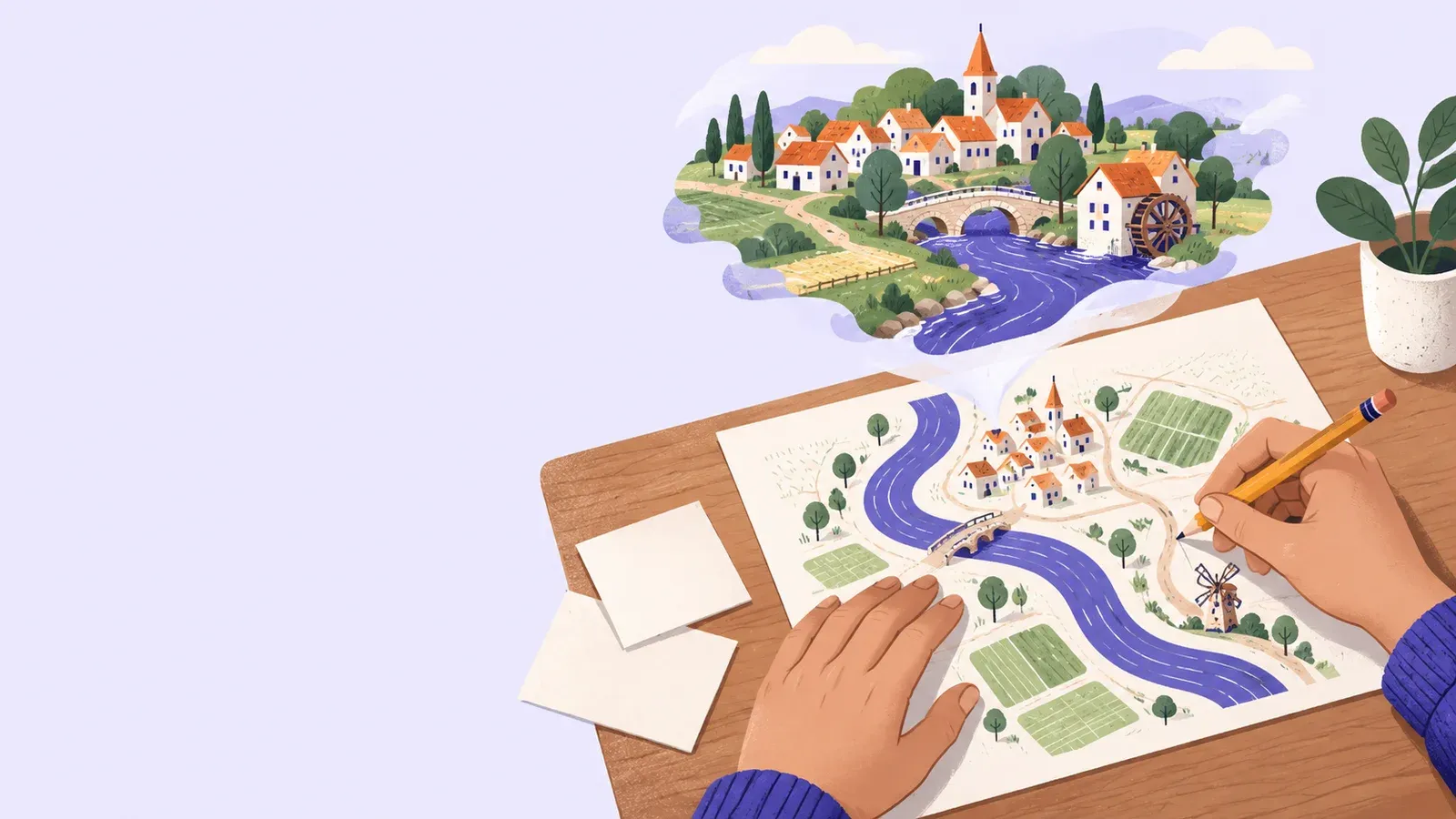
Draw a rough map showing the answers. Mark the water source, homes, fields, workplaces, bridge, and paths. Arrows can show movement. Treat invented solutions as provisional; research any real process you want to represent accurately.
The Sanderson lecture notes explain how connected ideas can give a setting depth. For this village, the bridge might affect market days, jobs, and who maintains the crossing.
Give one constraint practical consequences
Choose a limitation: the bridge closes during floods. Add three consequences. Perhaps grain must be stored on the home side, boat owners gain seasonal work, and residents contribute labor to repairs.
Name two people with different needs, such as a miller needing deliveries and a ferryman charging for crossings. Give each a reasonable preference. Avoid making every resident share one opinion.
If you add magic or unusual technology, record its limits and who can use it. Check whether it changes your earlier answers about food, work, or travel.
Test the plan and repair a gap
Imagine a morning when the bridge is closed and someone needs flour. Trace the person’s route and choices on the map. Where is the grain stored? Who can mill it? How is a crossing paid for? Add or revise only what the test needs.
If an answer contradicts an earlier note, change the note or explain the exception. Leave distant kingdoms and long histories in a later-ideas list.
Ask a friend to trace the same problem and identify one confusing link. Save the revised page, then test another everyday task or extend the map to one neighboring place.

Build connections between ideas
Practice and discuss your setting
- Writing Excuses on practicing worldbuildingListen to writers discuss recording ideas and turning familiar interests into worldbuilding exercises, with a free transcript.
- r/worldbuilding posting guidePrepare a focused question with original context and citations, following the community's restrictions on AI-created or AI-edited material.