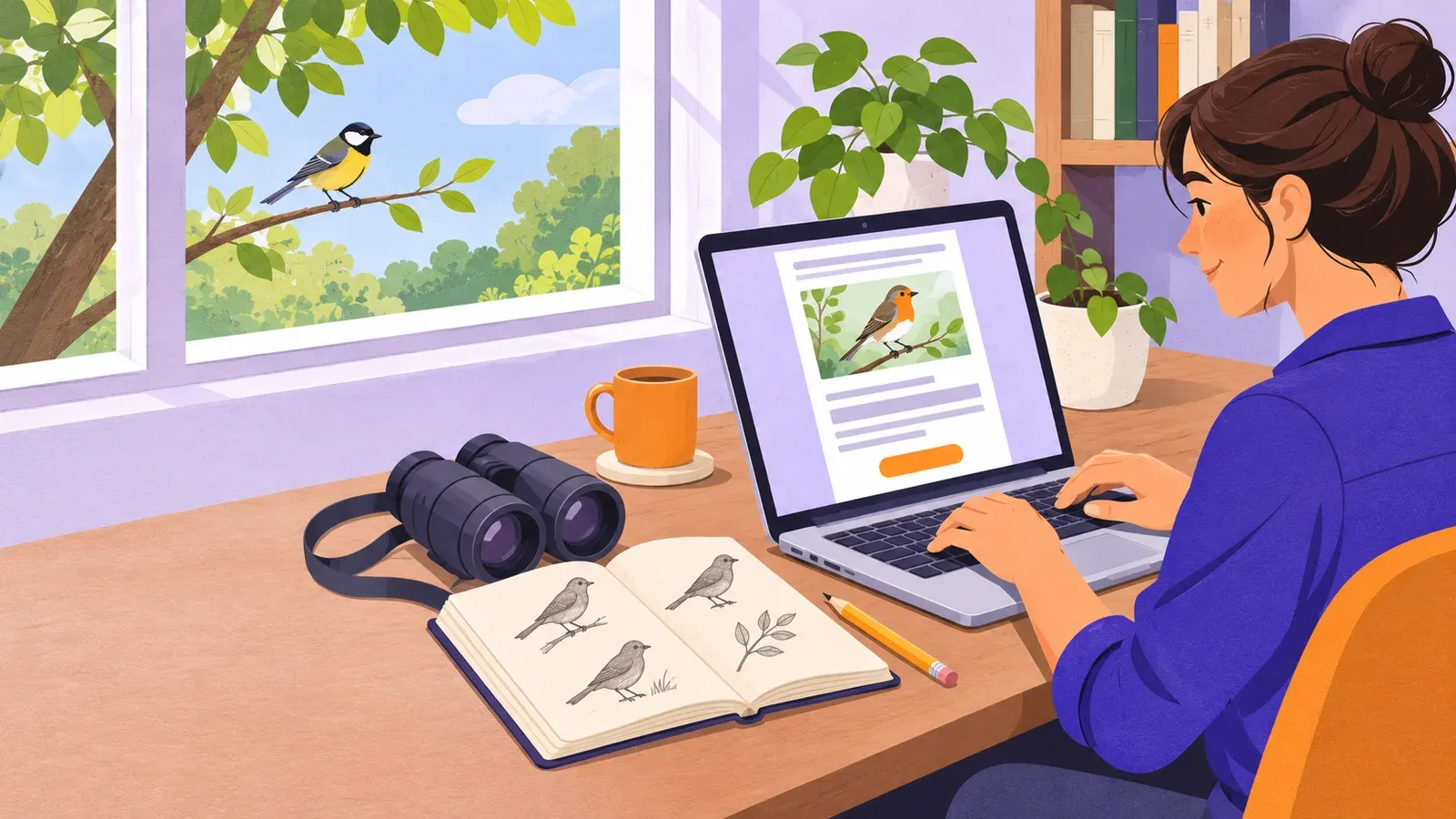
Start a paid birding newsletter with one free issue
- What it pays
- Example US$100 gross in month one
- Cost to start
- US$0 with existing tools
- Difficulty
- Beginner
- First result
- One free sample issue
Ten web subscribers at US$10 each. US$83.40 before overhead and work
Research, mailing address, payment fees and refunds
Needs reliable birding research and a sustainable schedule
Check the inbox proof and gather opt-in responses
Test an observation issue for US beginner birders, then price two monthly practice notes with clear signup and cancellation terms.
What you need to know
-
A subject you can check
Check birding references. Use your own words and licensed images.
-
A repeatable issue format
Plan a 15-minute task, identification link and beginner answer.
-
Reader permission
Collect explicit signups, never bought lists or unasked contacts.
Write a free issue that can stand alone
Give US beginner birders a free Issue 0, Notice the bill:
Watch a nearby bird for 15 minutes without approaching. Before guessing its name, note body shape, bill and behaviour. Compare those clues with Audubon’s guide. Which clue narrowed the possibilities?
Observations come before guessing. No species name needed. Use owned or licensed images, and request permission before quoting replies.
Test delivery and the schedule
Draft Issue 0 in Substack and email a test to yourself. Check inbox layout, links, sender, footer and unsubscribe route. Test recipients are limited to you or your team. After volunteers sign up normally, confirm free audience and email delivery settings, then publish and send Issue 0.
Ask five willing readers what they tried or found unclear. Time a second issue and outline two more. The proposed paid offer is two notes monthly, first and third Fridays, each with a 15-minute task, identification link and beginner answer, plus archive access. Revise weak material before charging.
State the recurring bargain
Before upgrade, state US$10/month recurring until canceled, what stays free, the paid schedule, archive, contact response window, cancellation and refund terms. Web cancellation usually stops renewal but leaves access until period end, and free emails may continue. Explain email unsubscribing separately. Handle refunds under your terms and applicable rules. If you miss an issue, tell readers and offer a fair remedy.
Substack requires opt-in. For US promotional email, follow FTC sender, postal-address and opt-out rules. A qualifying mailbox can protect your home address.
Assume ten US readers each pay US$10 through web checkout, with a US Stripe account, US cards and USD, without tax, discounts or refunds. From US$100 gross, Substack’s 10%, card fees of 2.9% + US$0.30 each, and recurring billing at 0.7% leave US$83.40 contribution, before overhead, unpaid work and tax. This is not profit or a forecast. Budget four launch hours and eight for two issues and replies. One cancellation without replacement means US$90 gross next month.
Finding your first clients
-
Invite willing free readers
Share the signup link where allowed. Ask what readers tried.
-
Test the paid promise
Show the next topics, schedule and proposed US$10 price.
-
Offer an explicit upgrade
After revision, invite paid signup and track cancellations and support.

Draft and proof the first issue
- Substack first-post guideSet up a post and check its audience and delivery settings before publishing.
- Substack test-email helpSend yourself an inbox proof and check what subscribers will receive.
- Audubon bird identification guideUse identification clues as source material for the sample issue's observation task.
Check fees and reader rights
- Substack pricingInclude platform, card and recurring-billing fees when estimating receipts.
- Substack content rulesCheck permission, originality and privacy rules before adding readers or content.
- FTC commercial email guideRead US promotional-email rules for sender details, address and opt-out requests.
- Substack cancellation helpExplain how ending paid renewal differs from stopping newsletter emails.