Test shortbread packs before selling
- What it pays
- Example US$28 gross per batch
- Cost to start
- US$25 assumed private rehearsal
- Difficulty
- Moderate
- First result
- Seven trial two-piece packs
Seven packs leave US$18 before setup, tax and labour
Ingredients, bags, cleaning, rejects, insurance and annual renewal
Needs repeatable baking, approval and labels
Private quality/label check only
Rehearse shortbread packs in unincorporated Los Angeles County, then check Class A approval, labels and costs.
What you need to know
-
A repeatable shortbread recipe
Use plain King Arthur shortbread. Skip optional extract/garnishes and weigh ingredients.
-
Clean food handling
Wash hands, sanitize surfaces and separate raw dough from baked food.
-
A scale and safe packaging
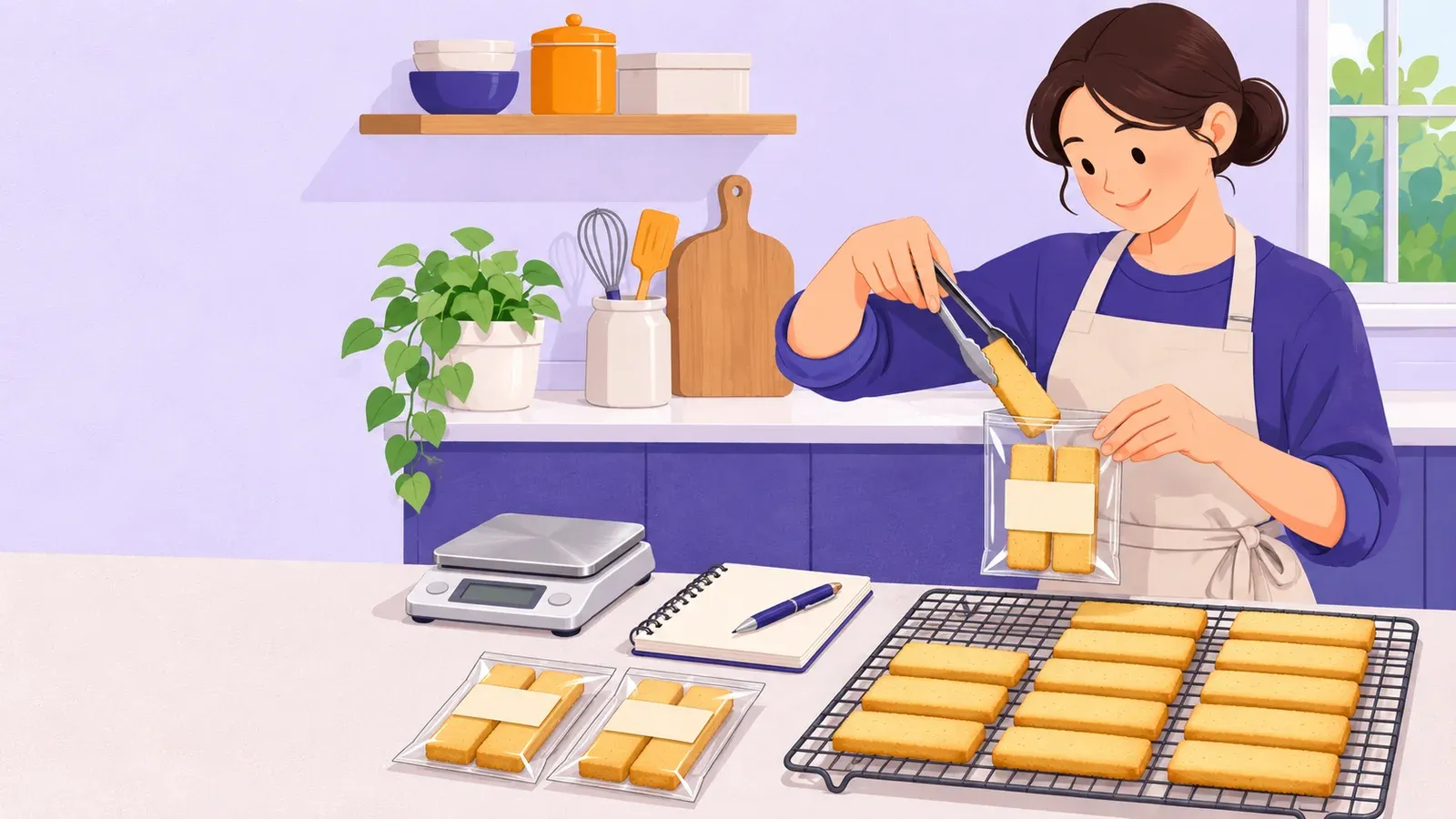
Weigh food alone and use food-safe two-piece bags.
Check the direct-sale route
In unincorporated Los Angeles County, California, USA, plan a two-piece shortbread pack for neighbours. Unfilled cookies are on California’s approved list. Class A direct pickup requires county registration and product/label approval. Check kitchen/planning conditions, submit self-certification and finish accepted food-handler training before paid production. No rehearsal orders.
Test the count and packaging
Use plain King Arthur shortbread for about 16 strips or wedges. Weigh ingredients, follow pressing/docking directions, and log amounts, costs, bake time and sound pieces. Wash hands, clean then sanitize surfaces by product directions, separate raw dough from baked food and never taste raw dough. Keep pets, children and household cooking out of the sale kitchen. Do not bake while ill.
Cut after the recipe’s warm rest, then cool fully. If cold pieces crumble, cut sooner next trial and recount. Reserve two sound pieces for cooling/overnight checks in a closed test pack. Fourteen make seven two-piece bags. Check texture/breakage, not shelf life. Photograph and weigh food without its bag.
Submit the label
For county review, draft product name, business name/address, ingredients by descending weight with subingredients, allergens, and net ounces/grams. Leave the Class A registration number pending, then add the issued number and issuing county before sale. Put “Made in a Home Kitchen” in 12-point type on the front. Shortbread contains wheat and milk; check actual packages for others and prevent cross-contact. Add a batch code. Avoid allergen-free or shelf-life claims. Sell only sound, approved, correctly labelled packs.
Cost a later pickup batch
County Class A registration costs US$118, and California ServSafe training is US$11.99. Add US$25 assumed rehearsal shopping for about US$155+ with owned tools. Check current fees. Insurance, local costs and failed batches add more.
After approval, assume seven packs sell for US$4 each, cash pickup. US$28 gross − US$7 assumed ingredients − US$2 bags/labels − US$1 utilities/cleaning = US$18 contribution, before setup, insurance, overhead, income tax and labour. Assume three hours for sourcing, baking, packing, cleaning, buyer contact and pickup. Training/application time is extra. Unsold/broken packs cut revenue.
Finding your first clients
-
Ask neighbours about the offer
Show local buyers photo and ingredients. No early orders.
-
Open one pickup window
After approval, post locally and cap orders at yield.
-
Confirm each handoff
Write quantity, price, allergens, pickup, payment and cancellation terms.
-
Track the next batch
Log handoffs and ask about texture and packaging.

Check the California approval path
- LA County Class A operatorsCheck the named county's registration, direct-sale process and label review.
- California approved foods listConfirm that plain unfilled cookies fit the current cottage-food list.
- California cottage-food labelsCheck required identity, ingredients, allergens, home-kitchen statement and net contents.
- California operator trainingCheck accepted training, initial timing and renewal rules for food handlers.
- California home-bakery tax guideCheck the tax treatment for take-away baked goods and its exceptions.