
Speed skating: try a coached short-track session
- Cost to start
- £16 Guildford trial example
- Difficulty
- Beginner
- First result
- A slow glide on speed skates
England, Nov 2026; local travel and confirmed loan kit assumed
Existing ice control and a club readiness check come first
Aim for a controlled coached attempt; progress varies
Try speed skates at a short-track club after learning basic ice control, then practise a slow straight glide and a familiar stop with a coach.
What you need to know
-
The club's entry skills
Ask for an adult introduction and a readiness check; Aldwych requires stopping, gliding and crossovers already.
-
Fitted loan skates
Confirm speed skates and the full required protection in your size before booking; loans depend on availability.
-
Covered, warm clothing
Wear long sleeves and trousers and bring water. Ask whether extra eye or cut protection is required.
-
Arrival and full cost
Confirm the first-session fee, ice time, off-ice warm-up, fitting time and any access needs.
Check the club’s entry skills
Short-track speed skating uses a rink oval and longer blades than ordinary ice skates. Aldwych Speed Club in Guildford, England welcomes adults but requires you to stop, glide and do crossovers already. Ask a coach to check those skills before booking. If you have never skated, begin with basic ice lessons and return when ready. Other clubs may set different entry rules; British Ice Skating lists clubs to contact.
Aldwych listed £16 for a first session in November 2026, including coaching, ice, entrance, equipment hire and a trial membership valid for eight sessions. The fee does not pay for eight sessions. Confirm the next date, full quote, access needs and loan sizes for speed skates, helmet, cut-resistant gloves, knee and shin pads, and neck guard. Arrive for the off-ice warm-up and fitting; the on-ice hour is only part of the visit.
Hold a position, then glide
Follow the club’s current ice safety rules. Wait for protective rink pads and the coach’s signal before entering; stay clear of moving groups. Let staff check skate and gear fit, and show how to use blade guards off the ice. Rehearse the coach’s stop on these unfamiliar skates before adding distance. Tell them if equipment hurts, slips or feels loose.
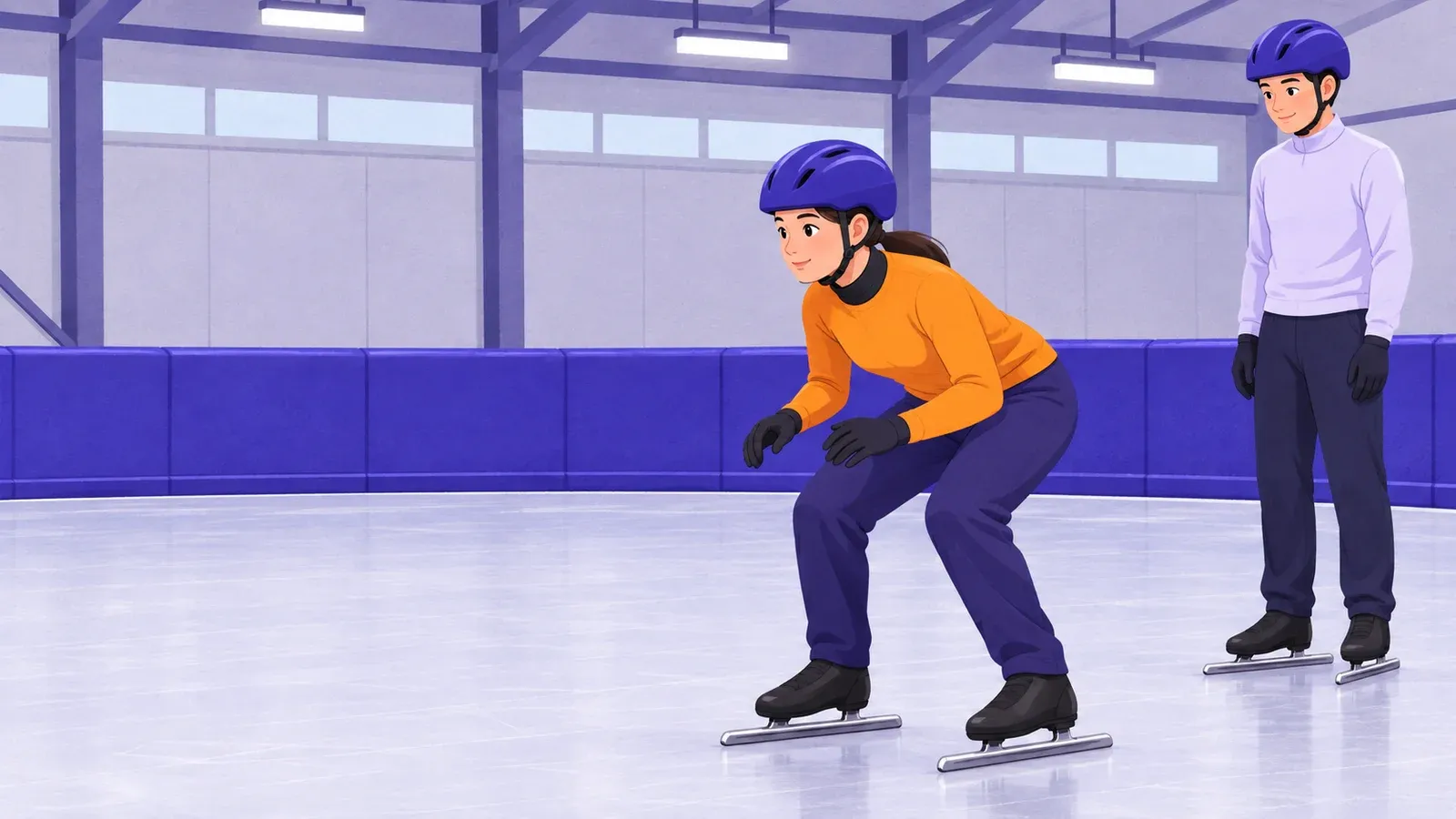
On clear ice, stand with skates parallel and comfortably apart. Bend your knees into the modest lowered position the coach shows, weight over the middle of each blade and eyes ahead. The older Speed Skating Canada teaching manual shows this position and a two-foot glide; use it with your coach, not as current kit rules.
On cue, take a few gentle pushes as shown, bring the skates parallel and glide briefly toward the space the coach chose. Finish with the stop you practised. If you rise upright or wobble, stop with the coach, reset your weight over both blades while still and try a shorter glide. Ask for another demonstration rather than crouching deeper or speeding up. Ask which position cue to repeat next time.

